In the final days of April 2026, Zambia’s Ministry of Information made a decision that sent shockwaves through the global digital rights community: it abruptly canceled RightsCon, Africa’s largest digital rights conference, just days before thousands of technologists, civil society advocates, and researchers were scheduled to gather in Lusaka. The official justification — vague references to unspecified ‘thematic issues’ and speaker problems — explained nothing and implied everything.
The Anatomy of a Canceled Conversation
RightsCon is not a neutral space. It is precisely the kind of gathering where governments get interrogated: where surveillance regimes are mapped, where censorship tools are named, where the architecture of digital authoritarianism is dissected in public by the people most directly harmed by it. The fact that Zambia — a country with a documented history of expanding digital surveillance infrastructure and restricting press freedom — chose to pull the plug with minimal notice is not incidental. It is the point.
The timing compounds the insult. A last-minute cancellation does not just close a venue. It strands hundreds of participants mid-travel. It signals to every government watching that the tactic works — that digital rights advocacy can be extinguished before it begins with a bureaucratic shrug and a press release no one is required to explain. The vagueness is the message: we do not owe you a reason.
This moment did not arrive in isolation. Across the same week, monitoring groups reported that Iran’s communications suppression — a rolling, multi-front campaign targeting VPNs, messaging apps, and independent internet infrastructure — had entered its fifty-fourth consecutive day. Researchers described it as a form of ‘digital feudalism’: a deliberately fragmented, deliberately unstable information environment designed not merely to silence voices but to exhaust the people who carry them.
The Pattern Is the Policy
What unites Zambia’s cancellation and Iran’s siege is not geography or political ideology. It is method. Both represent a calculated understanding, increasingly shared among governments of vastly different character, that the digital commons — the open, interconnected spaces where dissent finds its footing — is terrain worth fighting for. And the most effective way to fight for it, from the state’s perspective, is to close it down before anyone notices it was ever open.
This is not paranoia. It is pattern recognition. Over the past decade, we have watched governments pass data localization laws that make cross-border encryption nearly impossible, platform liability regimes that turn companies into compliance officers for state surveillance, and emergency powers that suspend digital rights indefinitely in the name of security. The conference cancellation is simply the most visible edge of a much larger architecture.
What makes this moment different — what gives it a quality that feels closer to tipping point than trend — is that the people most affected are no longer surprised. They have been building for this contingency for years.
Ungovernable Networks and the Infrastructure of Refusal
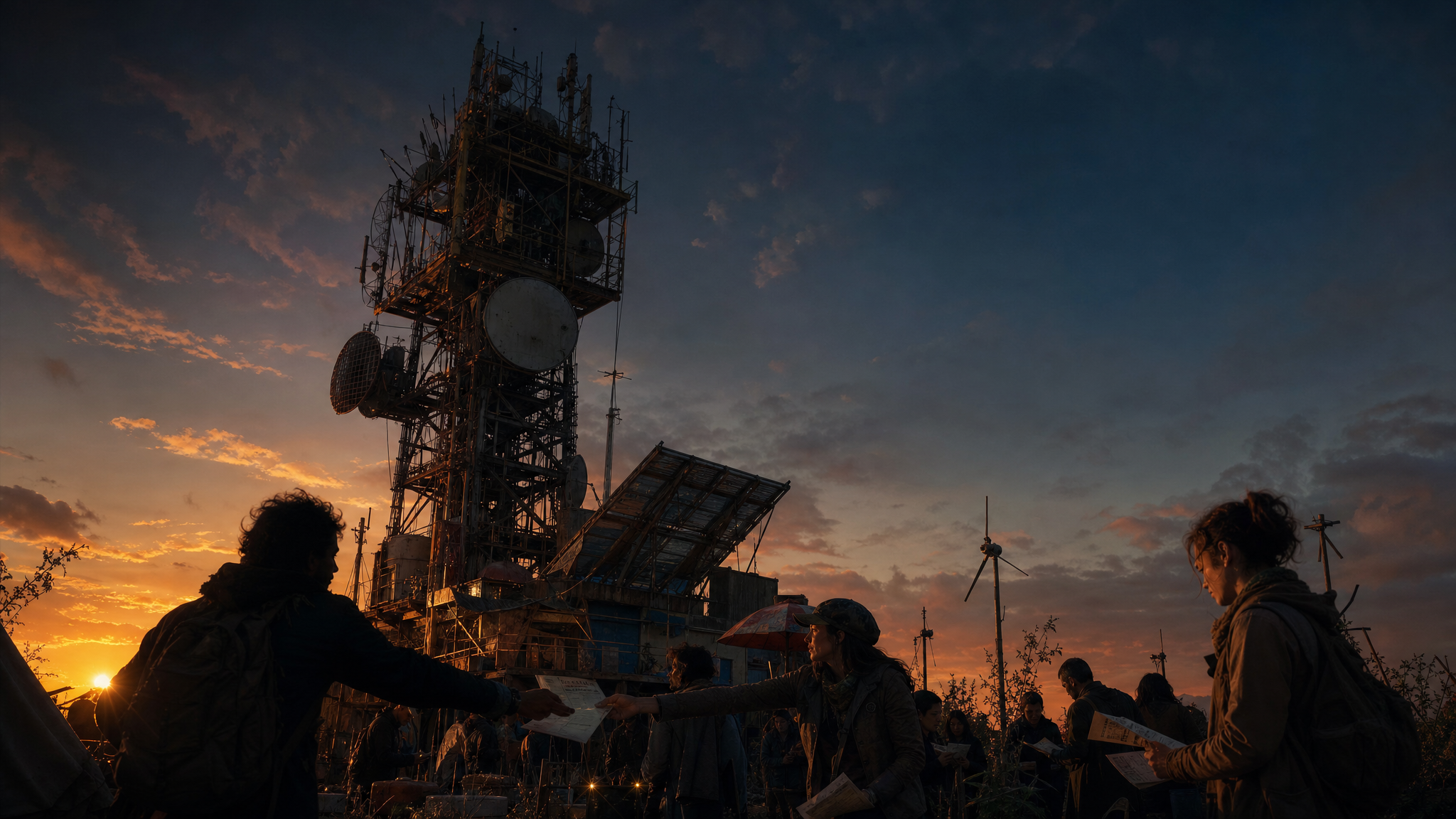
The same week that RightsCon was canceled in Zambia, civil society organizations that had planned to attend were already pivoting: spinning up encrypted digital spaces, scheduling distributed virtual sessions, and routing around the cancellation the same way the internet was originally designed to route around censorship — by finding another path. This is not a workaround. It is a philosophy made practical.
Across the African continent, a generation of digital rights defenders has spent years building what institutional conferences cannot provide: decentralized, peer-to-peer knowledge networks that persist regardless of what any government decides to host or cancel. Mesh networking projects, community radio stations broadcasting encrypted data streams, offline-first tools designed for activists operating under intermittent or hostile connectivity — these are not futuristic proposals. They are in active deployment in precisely the countries where state interference is most aggressive.
The deeper logic at work here is one that solarpunk thinkers have been articulating for years: resilience is not a feature you add to a system. It is a design principle you build in from the beginning, which means accepting from the outset that centralized gatekeepers — even well-intentioned ones — will always be a point of failure. The conference that can be canceled with a phone call is the conference that was never truly decentralized.
What Resistance Looks Like When the Forum Closes
The lesson of RightsCon’s cancellation is not that formal digital rights advocacy is futile. It is that formal advocacy alone is insufficient. The spaces where power is challenged most durably are the ones that cannot be revoked by ministerial decree: the encrypted group chat that continues after the venue goes dark, the mesh network that keeps traffic flowing after the ISP cuts the line, the community archive that mirrors suppressed documentation across dozens of jurisdictions simultaneously.
This is also why the movements that have proven most difficult for states to suppress share a common structural feature: they do not depend on permission. The Irish fuel protesters who paralyzed their country’s fuel supply chain for a week in early April did not have a central organization to threaten or a headquarters to raid. Their coordination happened in WhatsApp groups and Signal threads and impromptu roadside conversations. The state knew who was protesting. It did not know how to stop them without stopping everyone.
Zambia canceled a conference. It did not cancel the conversation. The distinction matters enormously, and the people who understand it best are already building the infrastructure that makes it true. In every encrypted channel and offline archive and peer-to-peer knowledge exchange happening right now, invisibly, across the continent and around the world, the forum continues. The state just was not invited.