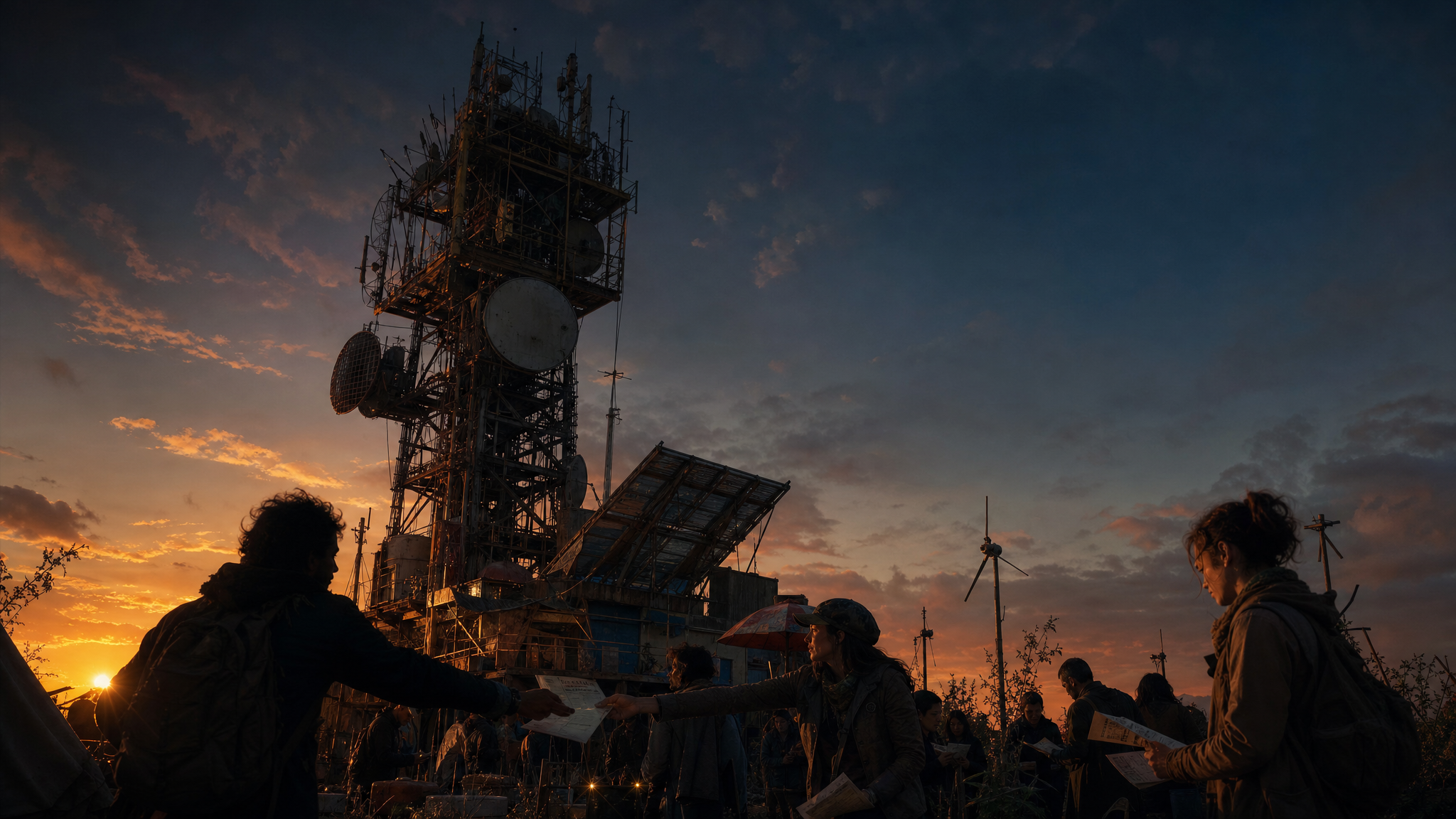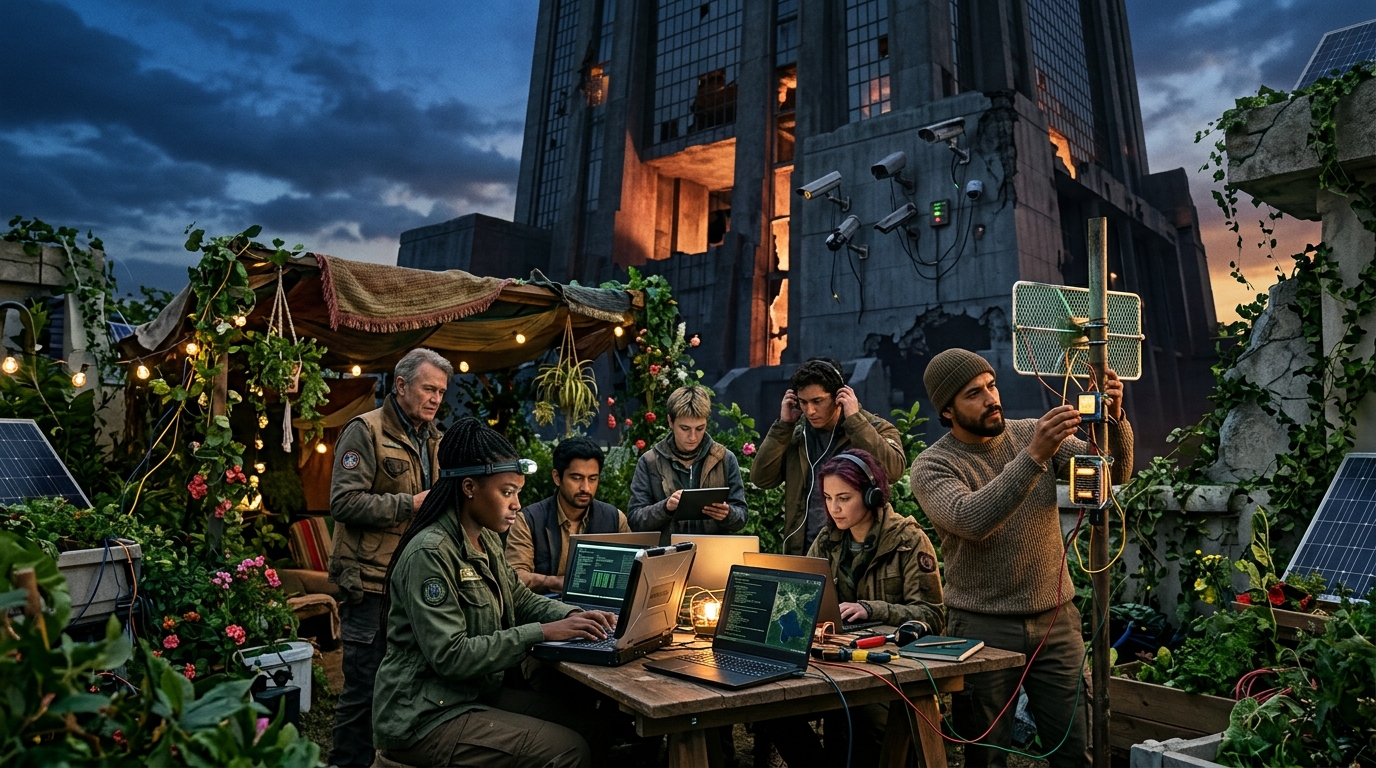
Something is stirring beneath the surface of our fractured information landscape. As corporate media consolidates into the hands of a shrinking oligarchy and governments tighten their grip on digital channels, a counter-current is surging — quiet, distributed, and impossible to shut off. The decentralized press is not coming. It is already here, already running ink through its veins, already whispering truths into ears that were told there was nothing left to hear.
The Blackout Is Real, and So Is the Workaround
In 2026, press freedom sits at a historic low. The Council of Europe describes the environment for journalism as “increasingly hostile.” Across the United States, newsrooms are shrinking, reporters face legal intimidation and equipment seizures, and billionaire-owned platforms quietly rewrite what counts as newsworthy. The economics are brutal: advertising revenue has fled to tech giants, leaving local and independent outlets gasping in what researchers now call “news deserts” — communities where no one is left to ask the hard questions.
But deserts can bloom. And the response to this blackout is not a single heroic newspaper storming back to the front lines — it is ten thousand smaller fires lit simultaneously, in basements, on encrypted servers, in community centers and prison yards and immigrant WhatsApp threads. The Nieman Lab named it plainly at the close of last year: journalism in America is going underground. That is not a retreat. That is a tactical evolution.
Tor, Tails, and the Architecture of Unkillable Words
The tools of censorship circumvention have matured into something remarkable. The Tor network now serves 2.5 million daily users worldwide, supporting over 65,000 unique .onion addresses — hidden harbors for whistleblowers, dissidents, and independent journalists operating in regimes that would rather they stayed silent. In February 2026, Arti 2.0.0 launched: a full Rust rewrite of the Tor codebase, hardened against modern attacks with new cryptographic defenses including Counter Galois Onion protocol for onion services. Tails OS, the amnesic operating system that routes every packet through Tor and leaves no trace on the machine it runs from, released version 7.5 in the same month.
These are not niche hacker toys. These are the printing presses of the 21st century underground. Journalists in Russia, where internet censorship intensified dramatically this spring, are using these tools to file dispatches that the Kremlin cannot intercept. Activists in Hungary are using .onion addresses to distribute election coverage that state-aligned media refuses to run. The architecture of free speech is being rebuilt one encrypted relay at a time — and it is being built to last.
Decentralized Publishing: Words That Cannot Be Deleted
Beyond the circumvention layer, a deeper transformation is underway in how content itself is stored and distributed. Platforms built on IPFS — the InterPlanetary File System — allow documents to live not on a single server that can be seized or silenced, but across a mesh of nodes where deletion becomes physically impossible without taking down the entire network. Decentralized preprint servers are already using Arweave to store activist and academic research permanently, with immutability built into the protocol. Authors on these platforms retain up to 90% of their revenue and full control over their work — no algorithm to game, no platform policy to fear.
This is not science fiction. Ghost-powered independent newsletters, community-owned publishing cooperatives, and mesh-networked local news hubs are already pulling readers away from the concentrated attention machines of legacy social media. The appetite for slow, deep, trustworthy journalism is real. People are hungry for words that have not been optimized for engagement metrics — words that have been written because someone believed them necessary.
The Informal Network as Infrastructure
What the Northwestern University Journalism Design Lab calls “informal news networks” may be the most durable infrastructure of all. These are the neighbors who text each other when immigration enforcement moves through a neighborhood. The incarcerated journalists trained by the Prison Journalism Project, filing stories from inside walls that were designed to disappear people. The community members who have always known that truth travels fastest on trust — and that trust is built face to face, not optimized by an algorithm.
These networks do not need a masthead. They do not need a venture capital round. They need people who refuse to accept that silence is the only option. And in 2026, those people are everywhere — writing, recording, distributing, connecting, refusing.
What We Owe the Signal
Every encrypted relay. Every community newsletter. Every zine slipped under a door. Every .onion address that carries a truth the powerful would rather bury. These are acts of radical generosity — contributions to an information commons that belongs to all of us and to none of the machines that have tried to own it.
The blackout is real. So is the signal. And the signal — distributed, decentralized, unkillable — is winning. Not because it has more money or more power. Because it has more people who understand that the freedom to know is not a feature of a platform. It is a human birthright. And birthright, it turns out, cannot be paywalled, de-platformed, or seized.
Keep transmitting.