The Signal Cannot Be Seized
In the early hours of October 14, 2026, police officers in Istanbul descended on the headquarters of Halk TV — one of the last remaining television broadcasters in Turkey willing to criticize the government. They stopped live broadcasts. They prevented staff from entering the building. They assigned a state-appointed trustee to take over the outlet. Within hours, a court ordered Halk TV’s social media accounts to be blocked from access inside Turkey. The cameras kept rolling, but they played music and documentaries. The voices had been replaced.
That same week, on the other side of the Atlantic, Argentine authorities deported Brazilian journalist Rogério Tomaz Jr. at the Buenos Aires airport. His crime? Being critical of President Javier Milei. The official justification — a visa technicality — was transparently a pretext. Milei had signed a decree in July authorizing the deportation of foreigners deemed critical of Argentina’s government. Tomaz Jr. was now banned from re-entering the country for five years. He was not smuggling weapons or crossing borders illegally. He was carrying a press credential and an opinion.
Two continents, two governments, one message from power: independent voices are threats to be neutralized.
The Crackdown Is Global, and It Is Not New
What happened to Halk TV did not happen in a vacuum. Turkey has been systematically dismantling independent media for over a decade. Dozens of journalists have been arrested or detained this year alone. Thousands of social media accounts belonging to journalists and rights defenders have been blocked. Last October, authorities seized TELE1 — another critical broadcaster — using the identical trustee mechanism. Each act of suppression is normalized by the one before it. The infrastructure of repression is iterative: each seizure makes the next one easier to justify and harder to resist.
Argentina under Milei follows a parallel logic. The deportation of Tomaz Jr. came after he posted a video in support of Brazilian students in Argentina who had faced violence and death threats for cheering for the Spanish team at the World Cup. His advocacy for vulnerable people in a foreign country made him a target. The decree that enabled his deportation was not written for him specifically — it was written as a tool, ready to be applied to anyone the administration finds inconvenient.
These are not random crackdowns. They are architecture. Governments building systems designed to make dissent structurally impossible — to ensure that even when individual journalists are replaced, the institutional capacity to question power has been dismantled.
What Remains When the Tower Goes Dark
There is something deceptively final about a television broadcast going silent. We are conditioned to believe that media is a centralized infrastructure — towers, licenses, satellites, buildings that can be raided and emptied. And it’s true that when Halk TV went dark on the morning of October 14, a real blow was struck. People who depended on that broadcast lost their connection. The staff who built that outlet — journalists, producers, technicians who showed up every day to tell the truth — were locked out of their own building.
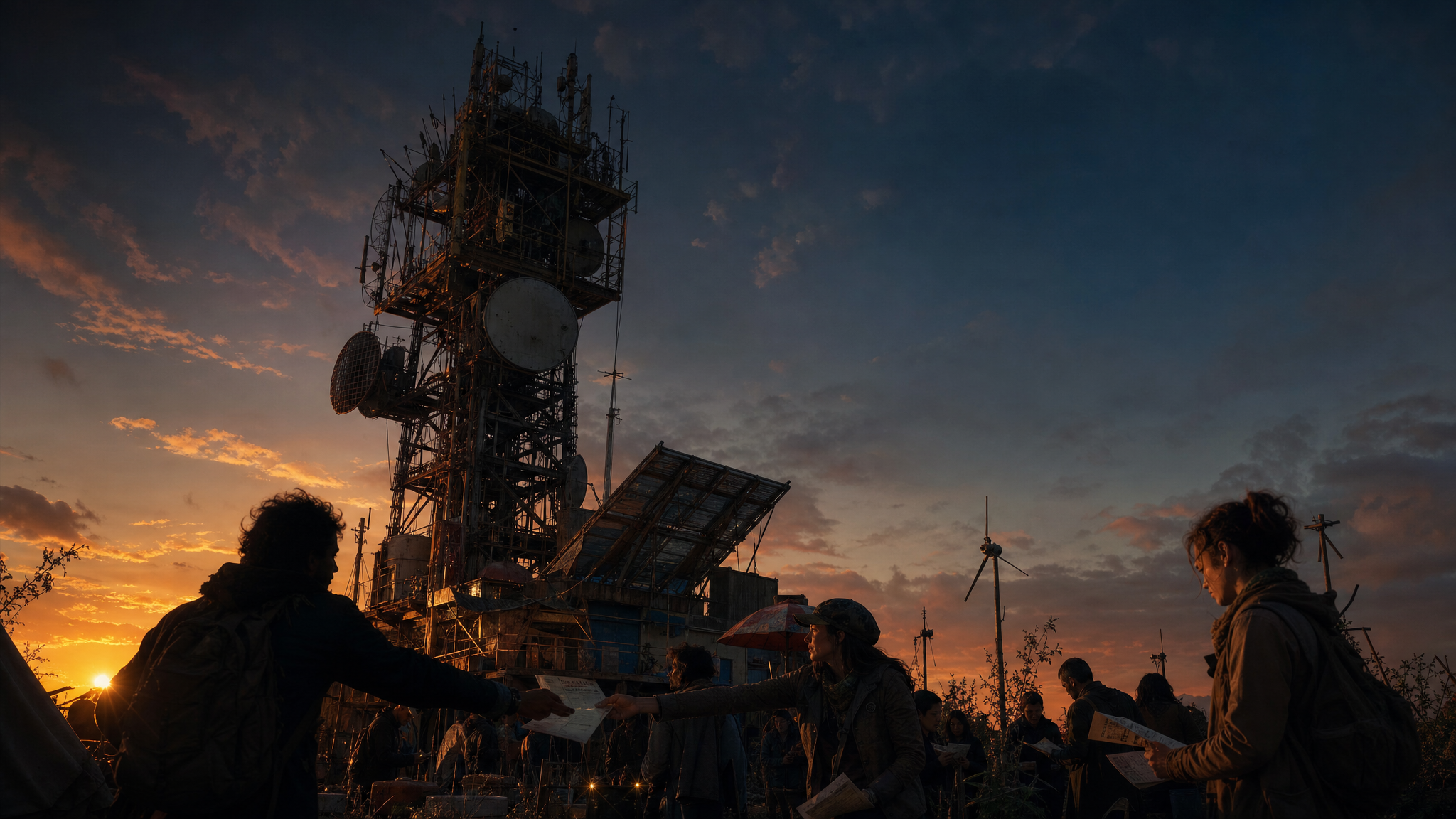
But the signal cannot be fully seized. Halk TV’s staff continued posting from the street. Rogério Tomaz Jr. gave interviews from Brazil. The CPJ issued global condemnations within hours. Every act of suppression now carries its own documentation, its own counter-signal radiating outward through the very networks that the raid was designed to silence.
This is the contested terrain of the information age: states can seize buildings, revoke visas, appoint trustees, and block domains. What they cannot do — not completely, not permanently — is stop the underlying human drive to witness and to tell. Every journalist who keeps reporting despite the crackdown, every citizen who screenshots the blocked broadcast and posts it from a VPN, every solidarity network that amplifies suppressed voices is rebuilding transmission capacity in real time.
Building the Distributed Press
The lesson of Istanbul and Buenos Aires is not despair. It is infrastructure. When centralized institutions are vulnerable to capture, the answer is decentralization — not as an abstract ideology but as a practical survival strategy for truth-telling.
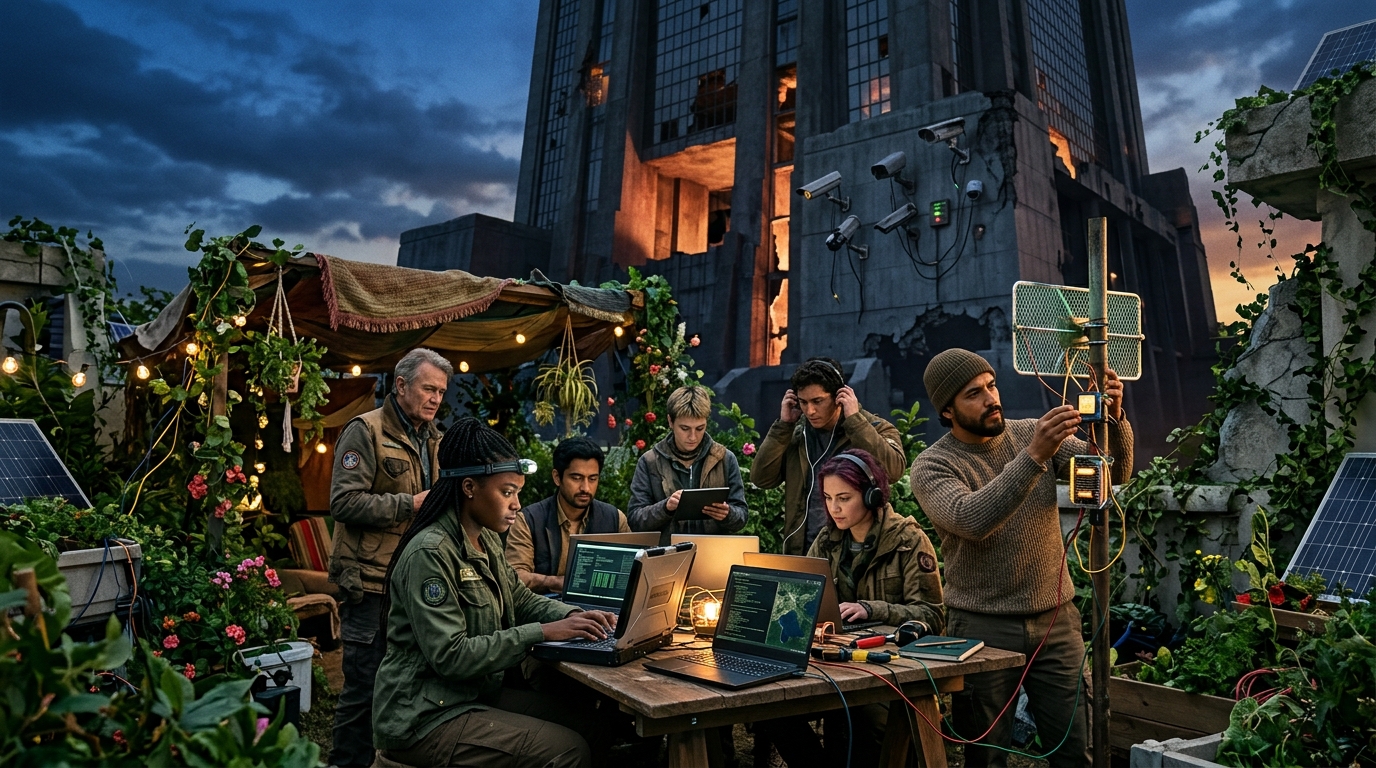
The movements that have survived sustained state suppression are those that built distributed networks: mesh communication systems that route around blocked nodes, encrypted journalist networks that function even when headquarters are raided, mutual aid structures that support reporters who lose their jobs because their outlet was seized. The answer to a seized tower is a hundred transmitters. The answer to a deported journalist is a thousand correspondents.
Independent media is not just a professional category. It is a form of collective infrastructure — built by readers who pay for it, by communities that protect it, by activists who amplify it, and by journalists who keep showing up even when the building has been locked from the outside. Every subscription to an independent outlet, every donation to a press freedom organization, every act of signal boosting is a brick in that distributed architecture.
The governments that seize television stations are betting that silence is achievable. History has not been kind to that bet. The signal endures. The question is whether we are building the infrastructure it needs to keep flowing.