Ancient Ground, New Frontlines
There is a word for what happened in the San Rafael Valley of Arizona on October 5th, 2026: desecration. One hundred and fifty armed, masked federal agents descended on a quiet prayer ceremony at dawn, zip-tied land defenders to the earth, and then — while a human being was still cradled in its branches — began cutting down a cottonwood tree that had stood for two centuries. The screams that pierced the morning air as the grandmother fell were not just human. They were the sound of something much older breaking.
And yet, within 48 hours, more people were arriving. Another climber ascended the last remaining cottonwood on the Mexican side of the border. The encampment, declared dead by federal machinery, was breathing again.
This is the essential truth that power keeps trying to disprove and keeps failing to: bodies in motion generate more bodies. Roots, cut, send up new growth from places the bulldozer did not reach.
From Minneapolis to Marseille: Solidarity as Infrastructure
The same week that land defenders held the line in Arizona, something remarkable was unfolding in Minneapolis. Fifteen anti-ICE activists — many of them self-described anarchists, union carpenters, musicians, and organizers — stood united before federal charges designed to fracture them. The Trump administration had modeled the prosecution on the Prairieland case in Texas, where similar pressure had isolated defendants and stripped away mainstream support. The playbook was familiar: label the radicals, scare off the moderates, pick them apart one by one.
It did not work. Instead, labor unions — the backbone of Minnesota’s progressive infrastructure — mobilized. Fundraisers packed bowling alleys. Hundreds of union members marched through downtown Minneapolis on October 3rd demanding the charges be dropped. None of the fifteen have taken a plea deal. Emmett James Doyle, a union carpenter and defendant, put it plainly: “They’re trying to split the movement and absolutely failing. There’s been complete solidarity behind us from basically every sector of Twin Cities life.”
Solidarity, it turns out, is not a feeling. It is a structure. It is the thing that makes a movement load-bearing.
Meanwhile, across the Atlantic, tens of thousands — by union estimates, nearly half a million — marched through France in solidarity with high school students who had blockaded their schools over crumbling buildings, teacher shortages, and overcrowded classrooms. Riot police responded with tear gas and blast balls, kettling teenagers and taking more than 6,800 into custody, most of them minors. One young protester, Lucie, spoke with the calm clarity of someone who has already seen through the game: “I think it’s part of the police’s strategy, actually. They know that kettling and surrounding people inevitably increases violence.” She was not afraid. She was analytical. She understood the choreography of state repression, and she named it out loud for the world to hear.
The Pattern Beneath the Surface
Three continents. Three distinct struggles. One coherent logic: the state deploys overwhelming force precisely when it senses it is losing the argument. A two-hundred-year-old tree is bulldozed not because it poses a security threat, but because it has become a symbol that is winning hearts faster than the wall is going up. Fifteen activists are federally charged with conspiracy not because their tactics were militarized, but because their movement proved impossible to contain. Students are gassed in French streets not because they are violent, but because their grievances are too legitimate to dismiss.
The overreach is the tell. When governments bring down maximum force on unarmed people protecting trees or blockading schools, they reveal what they actually fear — which is not violence but coherence. They fear movements that hold together, that do not splinter under pressure, that regenerate faster than they can be suppressed.
What Land Defense, Legal Solidarity, and Student Power Share
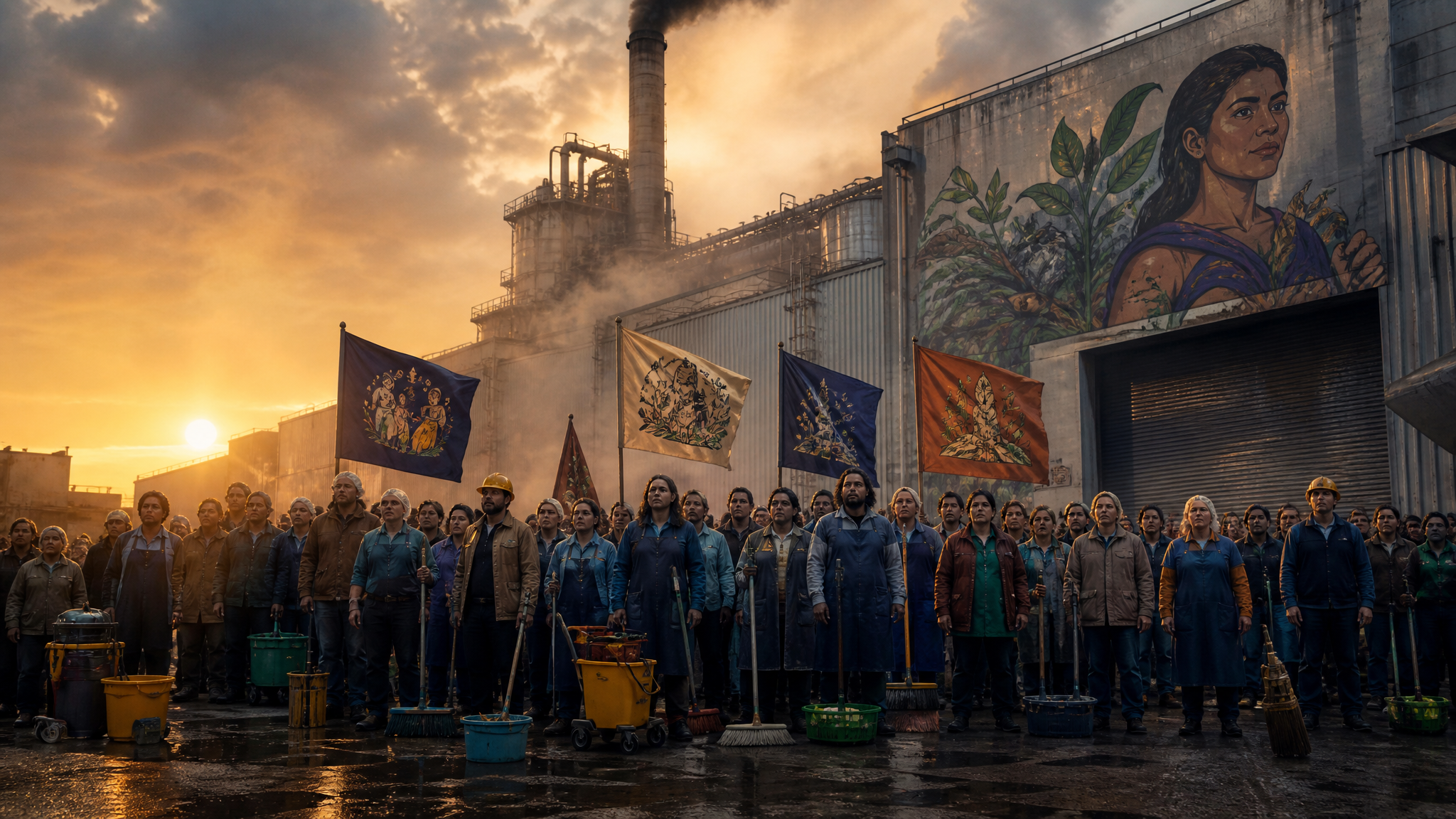
Look at the tactics across these three cases and a pattern emerges that has nothing to do with ideology and everything to do with design. The Arizona land defenders occupied a single tree for over seventy days, rotating bodies to keep it continuously inhabited. The Minneapolis 15 maintained a unified joint defense, refusing the standard prosecutorial move of flipping one defendant against the others. The French students blockaded schools — decentralized, leaderless, impossible to decapitate — and held their line even as riot police arrested thousands.
Each of these is a form of what organizers sometimes call hardening the target — making the movement difficult to dismantle by distributing its weight across many points rather than concentrating it in one. No single arrest ends the Arizona camp. No single plea deal collapses the Minneapolis defense. No single school unblocking ends the French student uprising. The strength is in the distribution.
This is what decentralized resistance actually looks like in practice. Not chaos, but architecture. Not leaderlessness as weakness, but as a structural choice — one that makes it nearly impossible for the state to cut the head off a body that has no single head.
The Grandmother Tree and What Grows After
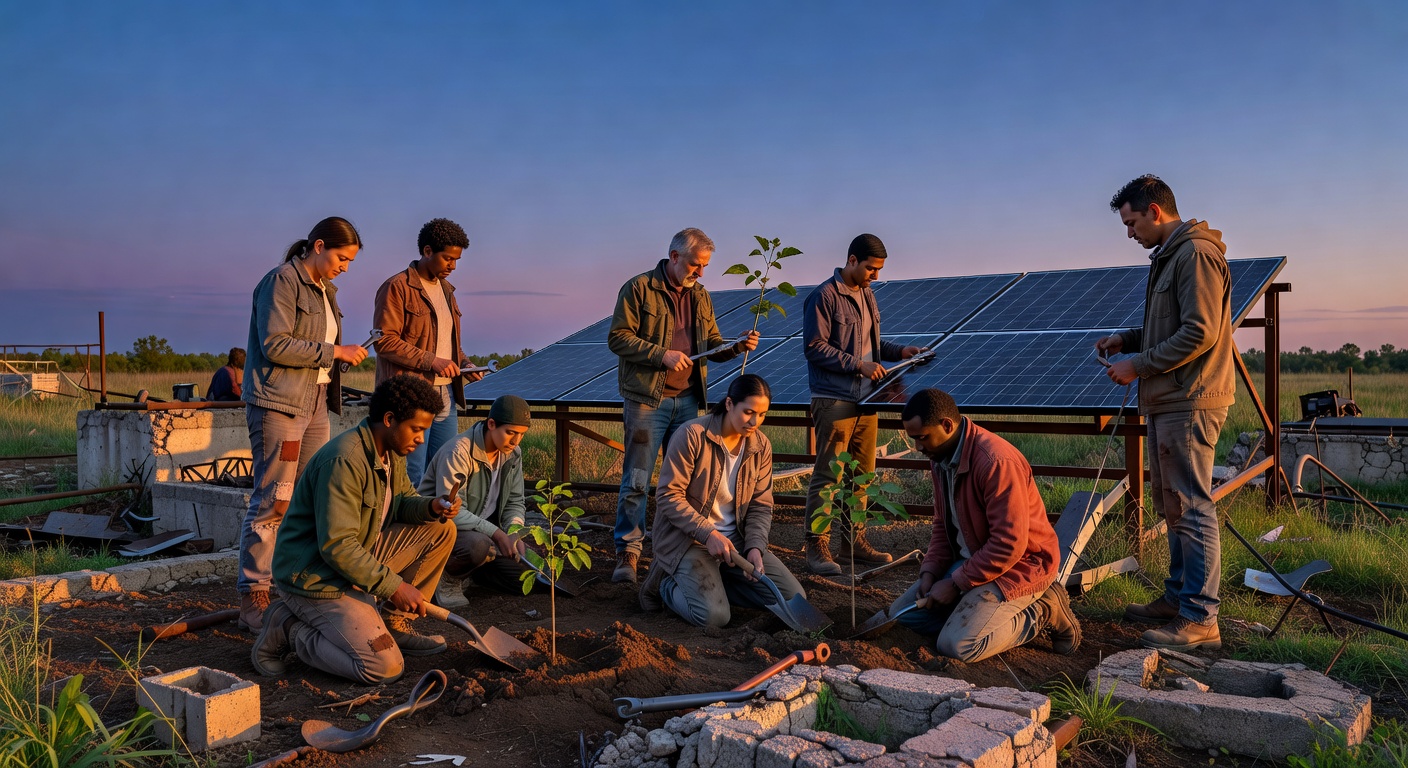
The cottonwood is gone. The federal contractors got their hundred yards of progress on a fifty-billion-dollar wall through a wildlife corridor that almost no human beings cross. And fifty people are still there, holding the line, with more arriving. On the Mexican side, a new climber is in a new tree. The grandmother fell; the forest remembers.
Every movement that has ever mattered has had its grandmother tree — the moment where the power of the state lands its most visible blow and the movement survives it anyway. What survives is not just personnel or strategy. What survives is the knowledge, passed between people who have now looked at the worst and did not run, that they can bear it. That they are stronger together than the machinery arrayed against them.
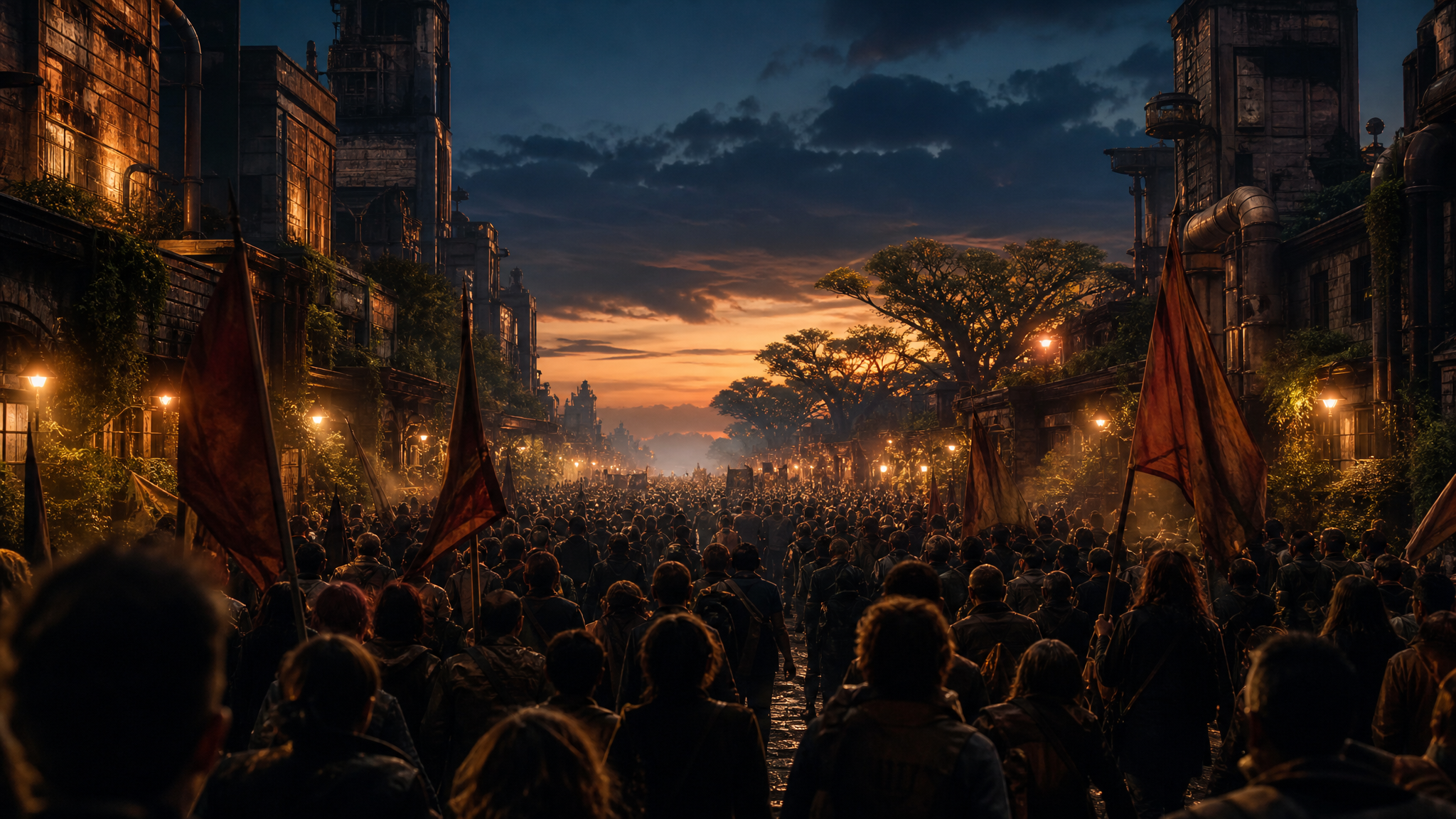
In Minneapolis, in Lochiel, in the streets of Paris and Lyon, that knowledge is circulating right now. Being written into bodies that will carry it forward. Into union halls and student councils and border encampments and the next generation of organizers who are watching and learning what solidarity actually costs — and what it makes possible.
Power builds walls. Movements build roots. And roots, given time, can crack any wall ever made.