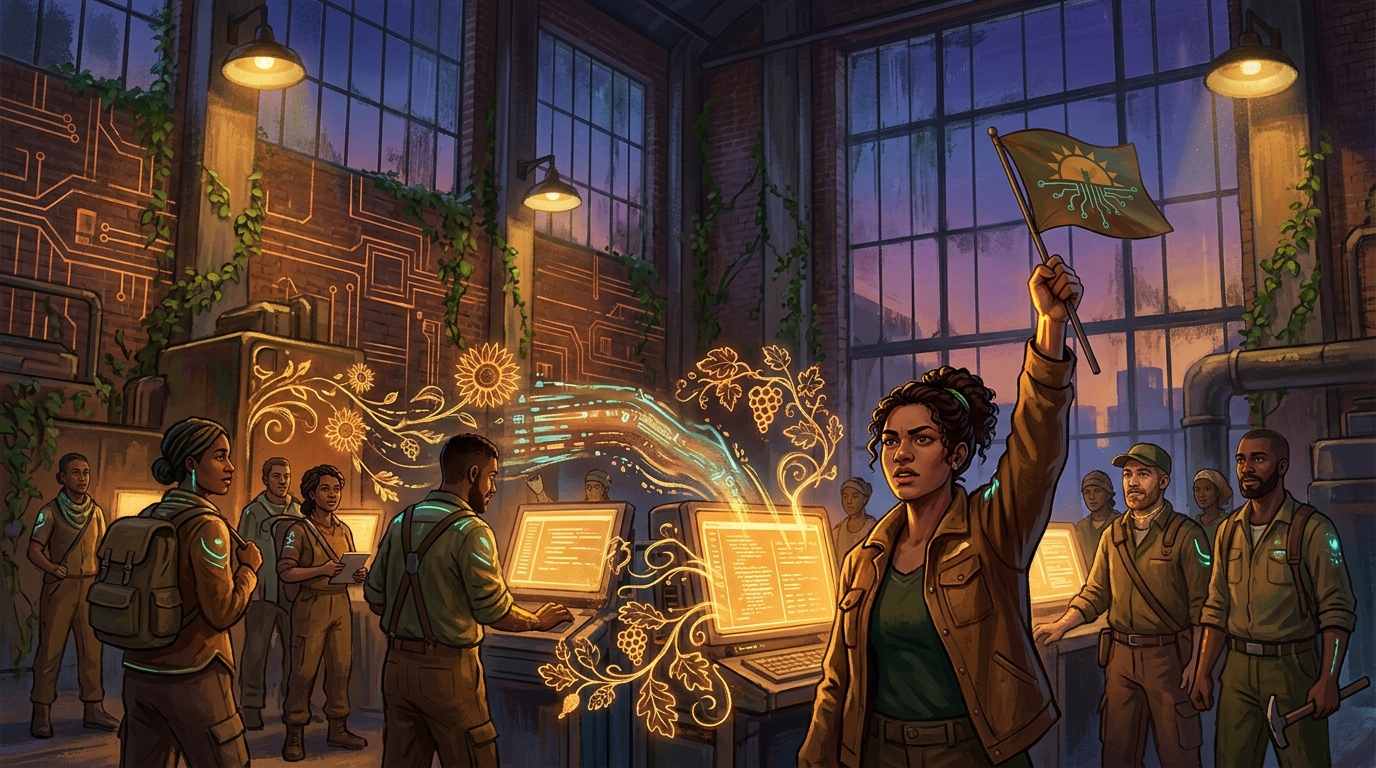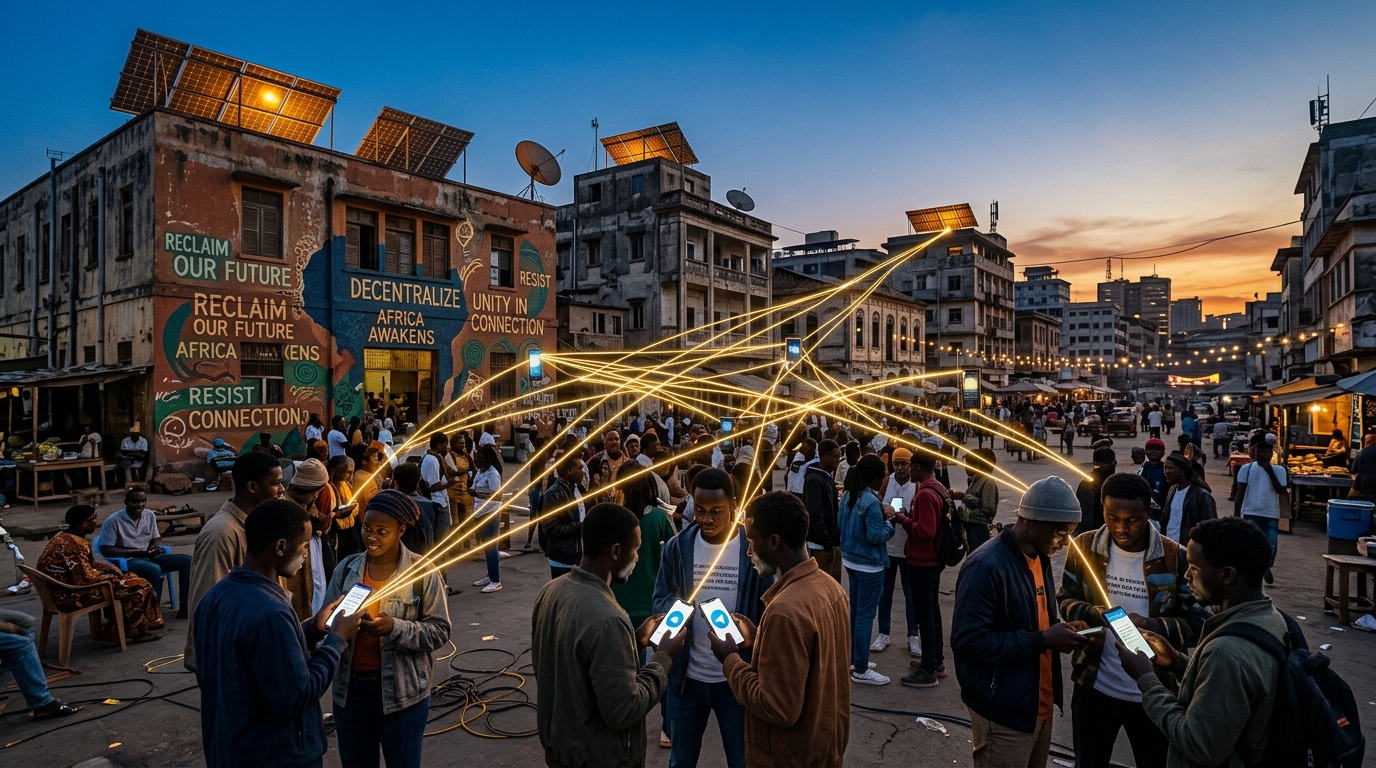
Something irreversible is happening across the African continent. In the squares of Nairobi, the encrypted group chats of Antananarivo, the TikTok feeds of Casablanca, a generation is dismantling the very idea that revolution requires a leader. Africa’s Gen Z is not waiting for a savior. They are becoming the network itself.
No Leader, No Single Point of Failure
The architecture of power has always depended on a simple vulnerability: find the leader, neutralize them, and the movement collapses. For decades, this logic served as the operating manual for governments seeking to suppress dissent. But the generation that grew up on peer-to-peer file sharing and decentralized social platforms has internalized a different logic entirely. When Kenya’s youth mobilized under the hashtag #RejectFinanceBill2024, there was no central committee to arrest, no headquarters to raid. The movement lived in a million phones simultaneously, and when the state came looking for a throat to grab, it found only air.
This is not accident. It is design. The leaderless, tribeless, party-less structure that characterized the Kenyan uprising has since become a template studied and adapted across the continent. In Madagascar, the Gen Z Mada movement emerged in late 2025 from protests over water and electricity shortages, escalating into a full confrontation with government corruption — and ultimately becoming the first Gen Z-led uprising to remove a sitting president on the African continent. The movement coordinated in part through BitChat, a Bluetooth-based offline messenger that worked even when the state cut internet access. No signal? Build your own signal.
Encrypted Streets
The tools these movements use reveal something profound about how they understand power. Encrypted messaging apps are not merely convenient — they represent a philosophical commitment to communications infrastructure that cannot be owned or monitored by the state. The adoption of decentralized platforms, offline mesh networks, and end-to-end encrypted coordination tools is an act of political imagination: a refusal to build your movement on ground that your opponent controls.
In Morocco, the Gen Z 212 movement pressed the government for substantive reforms on youth unemployment and public services, wielding decentralized digital networks to maintain pressure across multiple cities simultaneously. Authorities who had mastered the art of decapitating hierarchical movements found themselves facing something more like a mycelium network — severing one thread only caused the organism to reroute. The memes, the hashtags, the pirate flags borrowed from Japanese manga: these are not decorations. They are the shared symbolic language of a generation building a transnational identity that transcends the borders their colonizers drew.
From Protest to Political Architecture
What is emerging in Africa is not simply a new protest tactic. It is the first draft of a new political architecture. These movements are beginning to ask harder questions: how do you translate the energy of a leaderless uprising into durable institutional change? How do you govern without reproducing the hierarchies you destroyed?
The answers being developed are instructive. Community accountability networks, participatory digital platforms for collective decision-making, mutual aid structures built from the same decentralized logic as the protests themselves — these are not utopian fantasies. They are practical experiments being conducted in real time, in real cities, by people who have already demonstrated they can outmaneuver governments armed with surveillance apparatus and riot police.
The Heinrich Böll Foundation’s recent analysis notes that Africa’s Gen Z movements are not merely reactive — they are actively constructing the ideological foundations of post-authoritarian governance. The demand is not simply for better management of existing structures. It is for a fundamentally different relationship between citizens and the exercise of power.
The World Is Watching — and Learning
The lessons being forged in Nairobi, Antananarivo, and Rabat are reverberating far beyond the continent. The No Kings movement that mobilized an estimated eight million Americans across more than 3,300 sites on March 28, 2026 — one of the largest single-day protest actions in U.S. history — operates on explicitly similar principles: decentralized, grassroots-led, deliberately resistant to the creation of celebrity leadership that can be discredited or co-opted. The 50501 Movement and Indivisible built their organizing model around the same insight that Africa’s youth arrived at independently: the network is the leader.
This convergence is not coincidence. It is the global recognition of a structural truth. In an era of sophisticated state surveillance, algorithmic manipulation, and the rapid criminalization of dissent, movements that concentrate power in identifiable leaders are movements that invite their own decapitation. The leaderless network is not a weakness. It is the most advanced defensive formation that civil society has yet devised.
What Comes Next
The challenge now is depth. Decentralized movements have proven they can topple governments and force policy reversals. The unfinished work is building the durable institutions — rooted in the same horizontal principles — that can hold and extend those gains. The streets are part of the answer. So are the community servers, the cooperatives, the mutual aid networks, the open-source tools being built by activists who understand that infrastructure is politics by other means.
Africa’s Gen Z is not waiting for permission to build the world they need. They are doing it now, in real time, on platforms the old powers do not control, with tools designed for resilience rather than spectacle. The algorithm of liberation has no single author. It belongs to everyone running it.