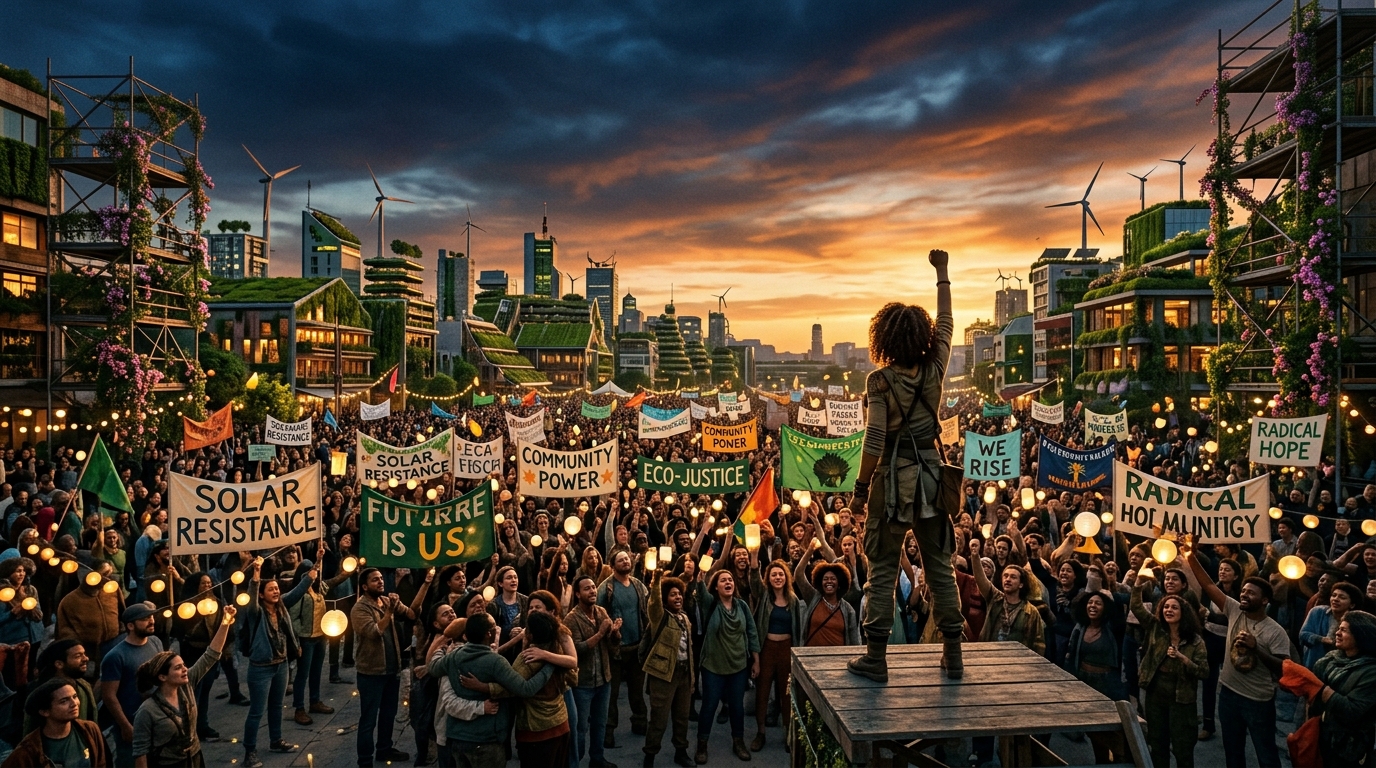
Something is shifting in the body politic of resistance. Not the flash of a single protest, not the viral moment of one raised fist — but the quiet, distributed work of building infrastructure that lasts. Across thousands of cities and towns in 2026, a movement that calls itself No Kings is doing something more ambitious than marching: it is constructing the bones of a new democratic culture, one coalition at a time.
The 3.5 Percent Threshold
At the heart of the No Kings movement’s organizing theory is a deceptively simple number: 3.5. Research by political scientist Erica Chenoweth suggests that when 3.5 percent of a population sustains active participation in nonviolent resistance, power structures reliably shift. It sounds modest. In practice, it represents tens of millions of people — not just showing up once, but building habits of collective action that compound over time. The March 28, 2026 mobilization drew an estimated eight million participants across 3,300 sites in the United States alone, representing a significant step toward that threshold. But the number matters less than what happens after the crowd disperses.
What makes this moment distinct from previous waves of protest is the deliberate effort to convert energy into infrastructure. Organizations like Indivisible, MoveOn, and the 50501 Movement are not simply calling people into the streets — they are building local coalitions, running organizing summits, and creating distributed leadership structures designed to outlast any single administration or political crisis. In Queens, New York, a coalition called Queens Says No Kings brought together 32 grassroots organizations for an activism summit in 2025, focused on communication, resource sharing, and coordination. This is the unglamorous work that durable movements are made of.
Horizontal Power, Vertical Impact
The architecture of No Kings is deliberately leaderless — or more precisely, distributed in its leadership. There is no single figurehead to arrest, no central server to shut down, no spokesperson to discredit. Power flows horizontally through a network of local hosts, volunteer organizers, and allied groups representing labor, civil liberties, environmental justice, and immigrant rights. This structural choice is not accidental. It reflects hard-won lessons from movements that were neutralized when their leaders were targeted or co-opted.
Digital tools have made this kind of distributed organizing newly possible at scale. Platforms like NGP VAN’s Mobilize handle volunteer recruitment and event management across thousands of simultaneous local events. Encrypted messaging apps allow organizers to coordinate without surveillance exposure. Social media hashtags function as live dashboards, aggregating demands and tracking commitments across geographies. The result is a movement that feels simultaneously local — rooted in specific neighborhoods, workplaces, and community centers — and planetary in its scope and ambition.
From Protest to Political Culture
Research tracking participants in the No Kings protests suggests something significant: people who attend these events report increased political efficacy and are more likely to take sustained action — canvassing, joining local groups, running for school boards and city councils. Protest, in this framing, is not the endpoint but the on-ramp. It is the moment when someone discovers they are not alone, that their anger is shared, and that collective action is possible. What organizers are building now is the infrastructure to catch those people when they arrive and channel their energy into something durable.
This is the solarpunk vision in political form: not the romantic image of a single revolutionary hero, but the slow, patient work of building networks of mutual support and accountability that function whether or not any particular election goes the right way. A movement that does not depend on saviors because it has learned to save itself.
The Long Game
Movements that endure are rarely the ones that burn brightest in a single moment. They are the ones that build neighborhood by neighborhood, conversation by conversation, coalition by coalition — until the infrastructure of resistance becomes indistinguishable from the infrastructure of community itself. The No Kings movement, at its best, is doing exactly that: transforming the energy of outrage into the architecture of belonging.
The question for every participant is not whether to show up at the next rally, but what they are building between rallies. What local group are they joining? What neighbor are they recruiting? What skill are they contributing to the collective project of democratic survival? The 3.5 percent is not a ceiling — it is a floor. The work of getting there is the work of building the world we actually want to live in, one decentralized node at a time.