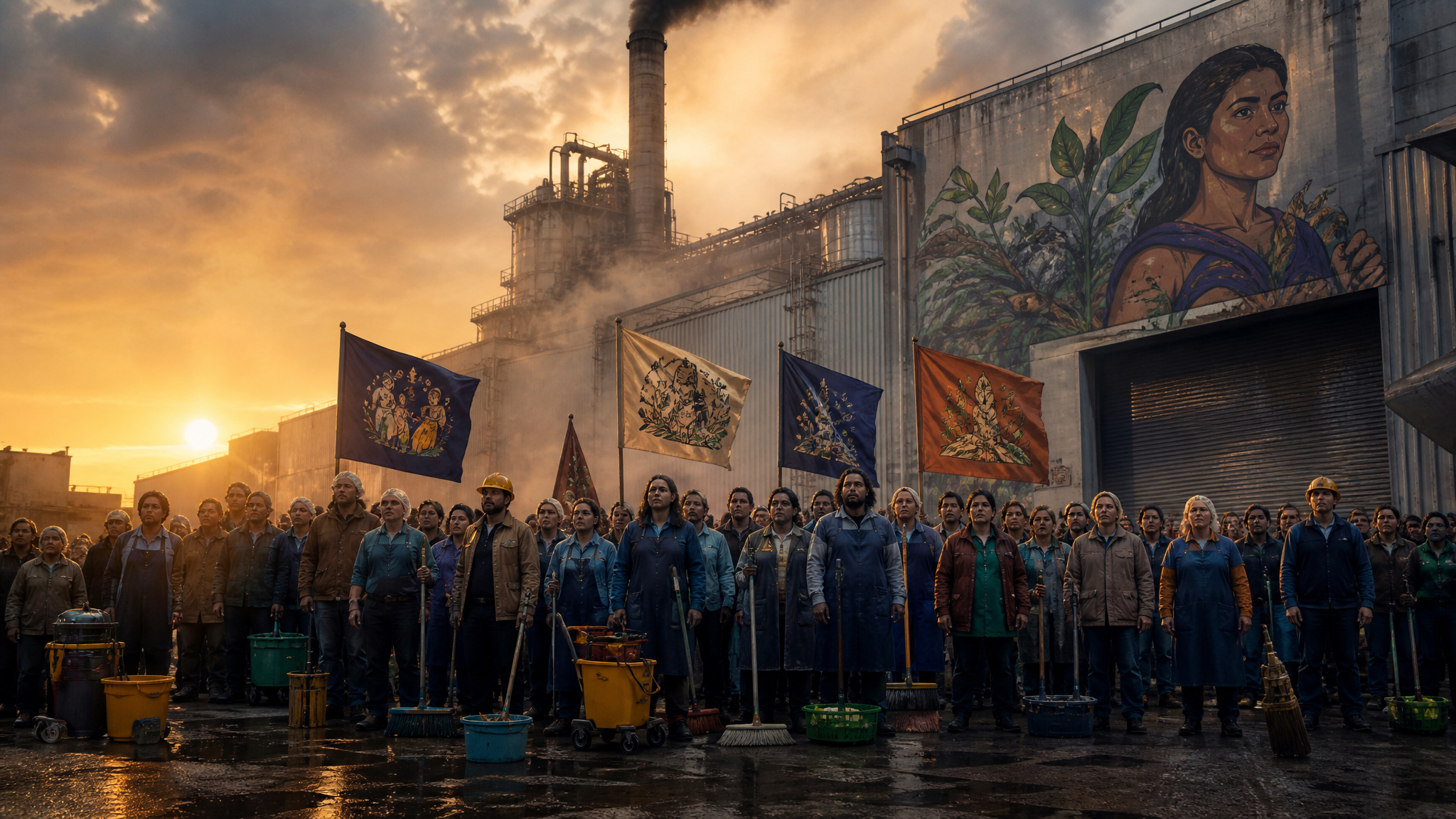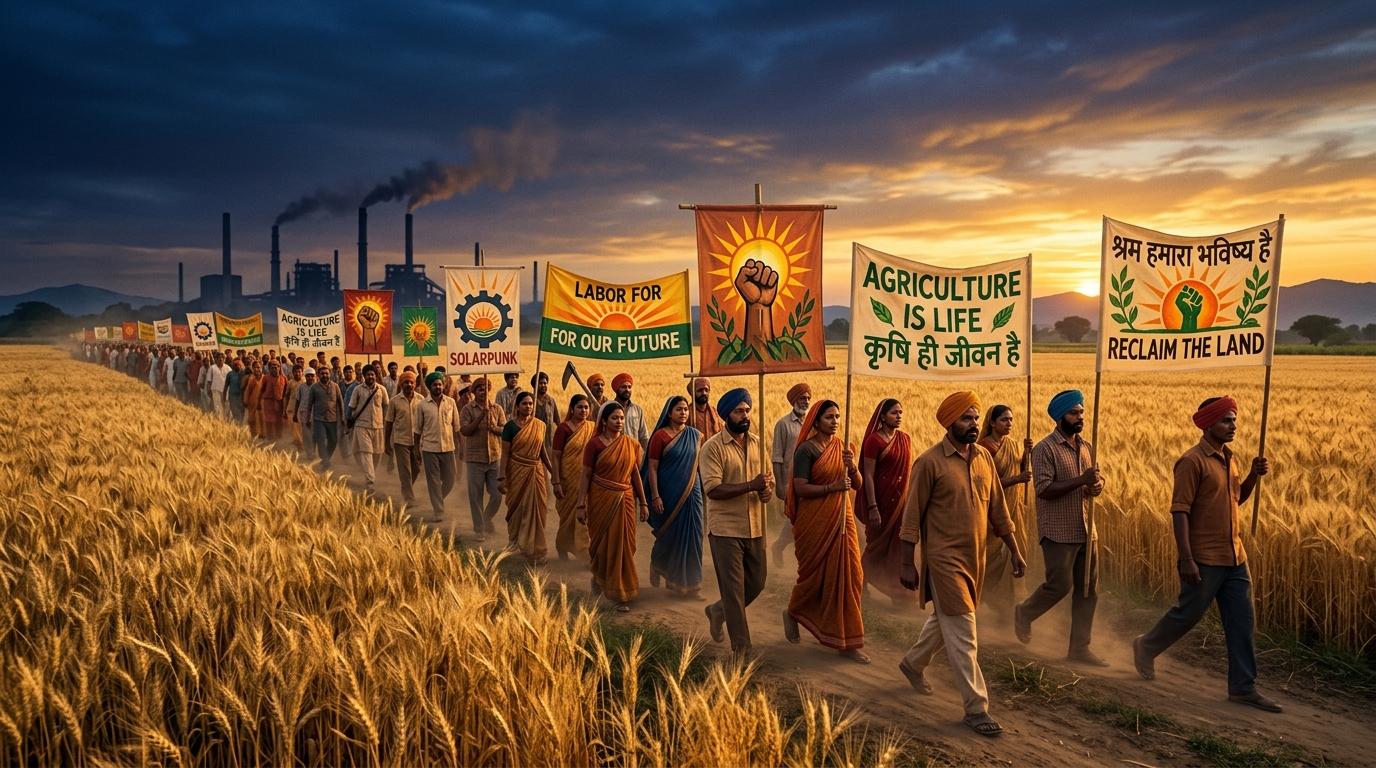
Across fifteen Indian states, something remarkable is happening. Workers who have spent decades toiling in fields and construction sites — people who earned the right to guaranteed employment through decades of organizing — are refusing to let that right be quietly legislated away. In the months since the Modi government replaced the Mahatma Gandhi National Rural Employment Guarantee Act with a hollowed-out substitute, rural India has erupted in a cascade of decentralized, uncontainable resistance.
A Right Dismantled by Design
The original MGNREGA, passed in 2005 after years of grassroots pressure, was a genuine achievement: a legally enforceable guarantee of 100 days of paid work per rural household, demand-driven and rights-based. It was imperfect, chronically underfunded, riddled with bureaucratic delay — but it was a right. The government could not simply say no. Workers could demand work and the state was obligated to provide it or pay compensation.
In December 2025, the BJP government replaced it with the Viksit Bharat – Guarantee for Rozgar and Ajeevika Mission (Gramin) — VB-GRAM G — a name as bloated as its bureaucratic intent. On paper it offers 125 workdays. In practice it introduces a 60-day pause during agricultural seasons, caps funding at whatever the federal budget permits, and transforms the program from demand-driven to supply-driven. The right to work has been converted into a favor the government may or may not choose to extend. For tens of millions of India’s poorest workers, this is not a technicality. It is an existential blow.
The Coalition That Cannot Be Beheaded
What makes the resistance to this dismantling so significant — and so instructive for organizers everywhere — is its structure. The NREGA Sangharsh Morcha, the coalition coordinating resistance, is not a party, not a union, not an NGO with a headquarters and a press officer. It is a network of over 30 organizations across 15 states: workers’ unions, mass organizations, public intellectuals, and local activists who have spent years embedded in the communities they serve.
This is what a truly decentralized coalition looks like in practice. When the government replaced MGNREGA, there was no single office to raid, no single leader to arrest, no single server to take offline. Protests erupted simultaneously at work sites and district offices. Funeral processions for the old law were held in village squares. Rallies filled panchayat meeting grounds. Each action was locally rooted but nationally resonant — a living demonstration that bottom-up organizing scales in ways top-down institutions cannot easily suppress.
The demands are clear and non-negotiable: repeal VB-GRAM G entirely, restore MGNREGA in its original rights-based form, implement a nationwide minimum wage of at least 400 rupees per day, and guarantee 200 days of work during natural disaster periods. These are not requests. They are assertions of what workers are owed.
Labor Rights as Anti-Authoritarian Praxis
There is a tendency in some activist circles to treat labor organizing as separate from broader anti-authoritarian politics — as if worker solidarity belongs to one tradition and resistance to state overreach belongs to another. India’s rural uprising dissolves that artificial boundary. The VB-GRAM G Act is not just an economic policy; it is a consolidation of power. By shifting control from a rights-based framework to a budget-dependent one, the central government gains discretionary leverage over the rural poor. Compliance can be rewarded. Dissent can be starved.
When the NSM demands the restoration of guaranteed work, they are not simply fighting for wages. They are fighting to maintain a structural check on state power — one that says some things are not subject to the mood of the treasury or the calculations of electoral politics. This is deeply anti-authoritarian work, even when it doesn’t carry that label.
What Solidarity Looks Like From Here
For those of us watching from distant cities and connected by screens rather than fields, the MGNREGA struggle offers more than inspiration. It offers a methodology. The Sangharsh Morcha did not wait for a charismatic leader. It did not wait for electoral opportunity. It built patient, distributed networks over years, and when the moment came it was ready to act at every level simultaneously — from the village panchayat to the national press.
As authoritarian governments worldwide continue to erode the social protections that constrain their power, the question for every movement is whether its roots run deep enough to survive the pruning. India’s rural workers are showing that they do. The right to work is not a gift the state bestows. It is a power that organized people claim — and refuse to surrender.