There is a reason authoritarian governments and fossil fuel corporations move in lockstep. The extraction economy is not merely a business model — it is a political architecture. It depends on concentrated power, captured regulators, disciplined populations, and the erasure of any alternative horizon. When Amnesty International published its analysis this week linking the global slide toward authoritarianism directly to accelerating climate catastrophe, they were naming something that frontline organizers have long understood in their bones: the fight for a livable planet and the fight for democratic survival are the same fight.
The Playbook Is Exposed
Amnesty’s report is unsparing in its diagnosis. Authoritarian projects advance through three interlocking moves: they discredit climate science and expertise itself, sowing enough cynicism to paralyze collective response; they lock in fossil fuel infrastructure through regulatory capture and coercive diplomacy; and they crush the dissent that would otherwise demand something better. In the United States, a Department of Energy report produced by so-called independent experts now claims projections of global warming are exaggerated. In Argentina, the president publicly insists climate change has no human cause. Russia’s state media exports this disinformation globally. The common thread is not confusion — it is conquest. Fossil fuel dependency is not an accident of the market. It is the intended outcome of a deliberate political project.
Understanding this is the first act of resistance. It means the climate crisis cannot be solved through consumer choices or incremental policy reform alone. It requires confronting power directly — which is exactly what the movement on the streets in May 2026 is doing.
Direct Action at the Threshold
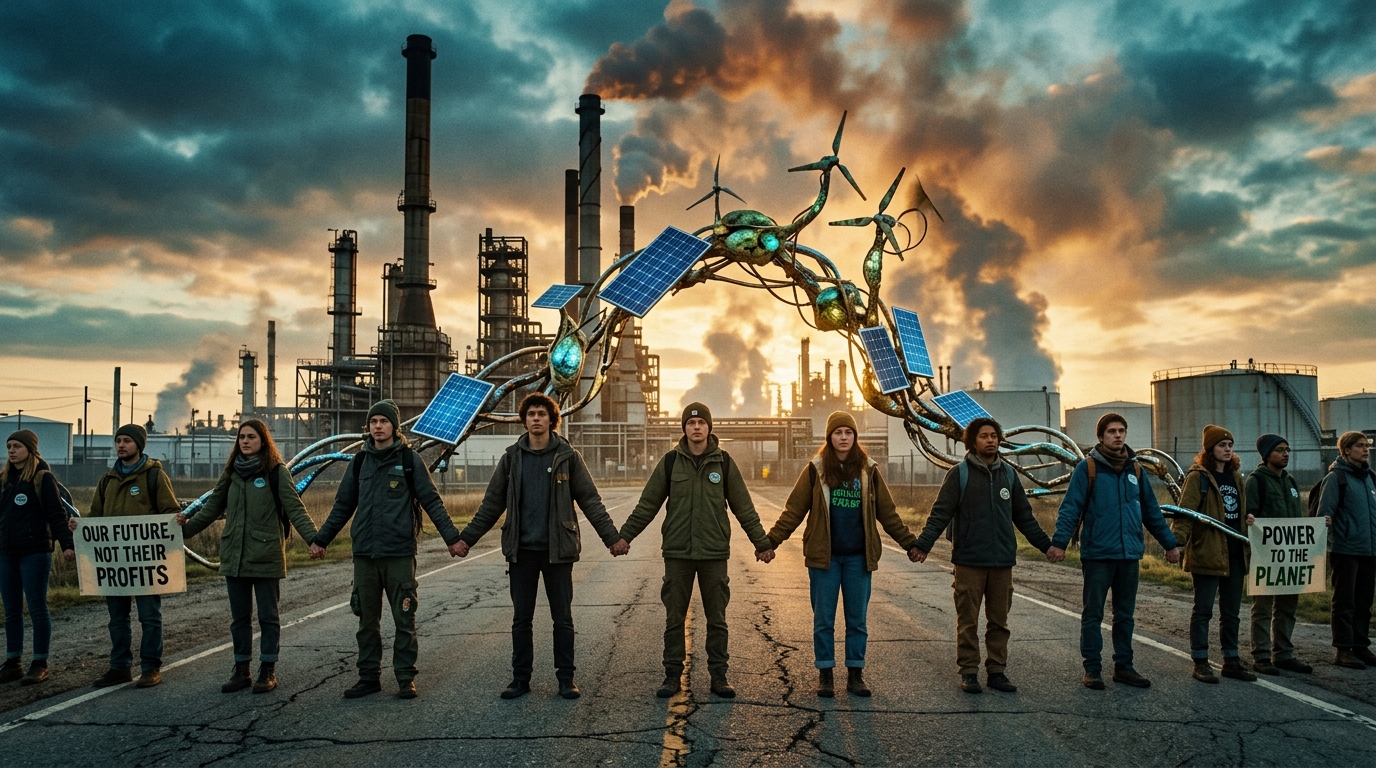
On May Day, while millions participated in the broader economic blackout of the May Day Strong coalition, climate activists brought a sharpened edge to the movement’s demands. Sunrise Movement organizers chained themselves to the entrance of the New York Stock Exchange — one of the most potent symbols of the financial architecture keeping fossil fuels alive — before being arrested. Others occupied a Portland hotel housing Department of Homeland Security officials. Six were arrested blocking a bridge in Minneapolis. These are not isolated acts of theatrical protest. They are a calculated escalation, a refusal to let the catastrophe proceed politely.
In roughly twenty U.S. cities, End Fossil Fuels contingents marched under the same banner as labor organizers, immigrant justice advocates, and democracy defenders. This convergence is not accidental. It reflects a maturing political analysis: that the forces dismantling democratic norms are the same forces demanding the right to burn the world. The climate movement is shedding its single-issue skin.
What Decentralized Power Looks Like in Practice
The model of resistance emerging in this moment draws from the same well as other mass movements — the leaderless, viral, block-by-block infrastructure that has proven so difficult for centralized power to suppress. The 50501 movement mobilized tens of thousands across all fifty states simultaneously without a budget or central organization, demonstrating that a simple, shareable idea planted in the right conditions can bloom into something no authority can easily decapitate. Climate organizers are absorbing that lesson. Fridays for Future has called for a Global Climate Strike on May 8th under the banner of a Fossil-Free Future — not a petition, not a letter-writing campaign, but bodies in the streets across the planet on the same day, in thousands of locations no single government can shut down.
What makes this moment genuinely different from earlier climate activism is the integration of political and ecological demands. Earlier waves of environmentalism often positioned themselves as above politics — science-based, technocratic, universally appealing. That posture bought some policy victories. It also left the movement vulnerable to exactly the kind of authoritarian information warfare being deployed against it now. The current wave refuses that false neutrality. It names the enemies. It builds coalitions across labor, housing, immigration, and democratic defense movements. It accepts that direct action, arrests, and material disruption are legitimate tools when the mechanisms of legal redress have been captured or closed.
The Stakes of the Fossil Fuel Fortress
Globally, the feedback loop identified by Amnesty is tightening. Disinformation suppresses public demand for action. Regulatory sabotage slows the transition to renewable energy. Coercive diplomacy pressures smaller nations to abandon fossil fuel treaties. Each turn of the loop buys another decade of extraction and narrows the window for survival. Vanuatu is drafting a fossil fuel treaty for the UN General Assembly. Climate litigation is multiplying in courts worldwide. A new generation of human rights cases is building on international advisory opinions that link fossil fuel expansion directly to violations of the right to life. These legal strategies matter. But they are slow, and the physical climate system does not wait for litigation to conclude.
This is why direct action — disruptive, embodied, willing to absorb the costs of arrest and confrontation — remains irreplaceable. Not because it is glorious, but because it is honest about the scale of what is being resisted. The fortress of fossil fuel power will not yield to politeness. It has proven that much.
The Solarpunk Counter-Vision
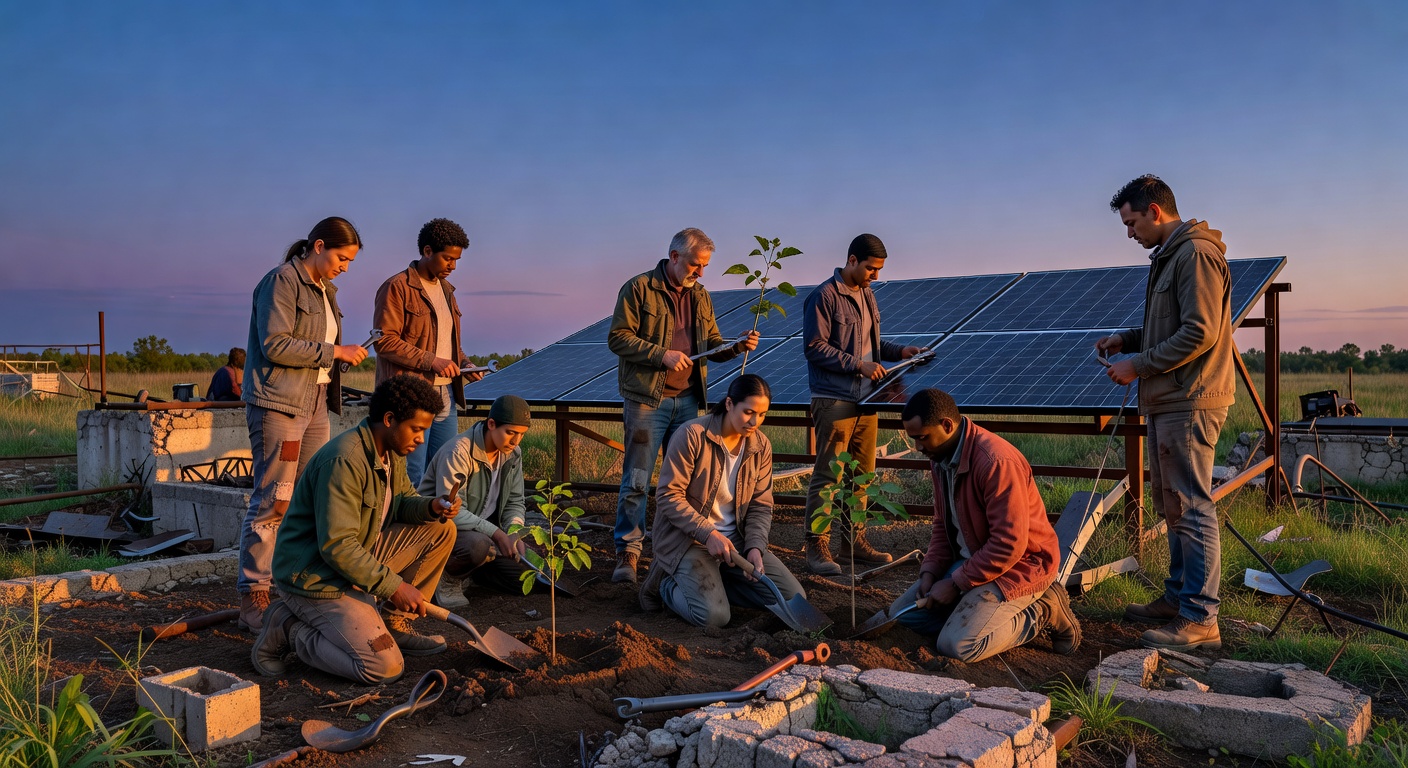
Against the fortress, the movement is building its own infrastructure — not walls, but webs. Community solar cooperatives. Decentralized energy grids designed to survive and resist. Mutual aid networks that make people less dependent on systems controlled by extractive capital. The solarpunk vision is not naive optimism. It is a strategic bet that building the alternative, materially and concretely, at the community level, makes the old system less necessary and less powerful with each passing season. The sun does not negotiate. The wind does not ask permission. And neither, increasingly, do the people who have decided this world is worth fighting for.
What is being built in the streets of New York and Minneapolis and Portland, in the courtrooms of international climate litigation, and in the community energy projects going up block by block across the Global South, is not a single campaign. It is the skeleton of a different civilization — one that does not run on the burning of the past, and does not require the suppression of its own people to keep the lights on. The question is whether it can be built fast enough. The answer, as always, will be determined by what people choose to do with the time they have.