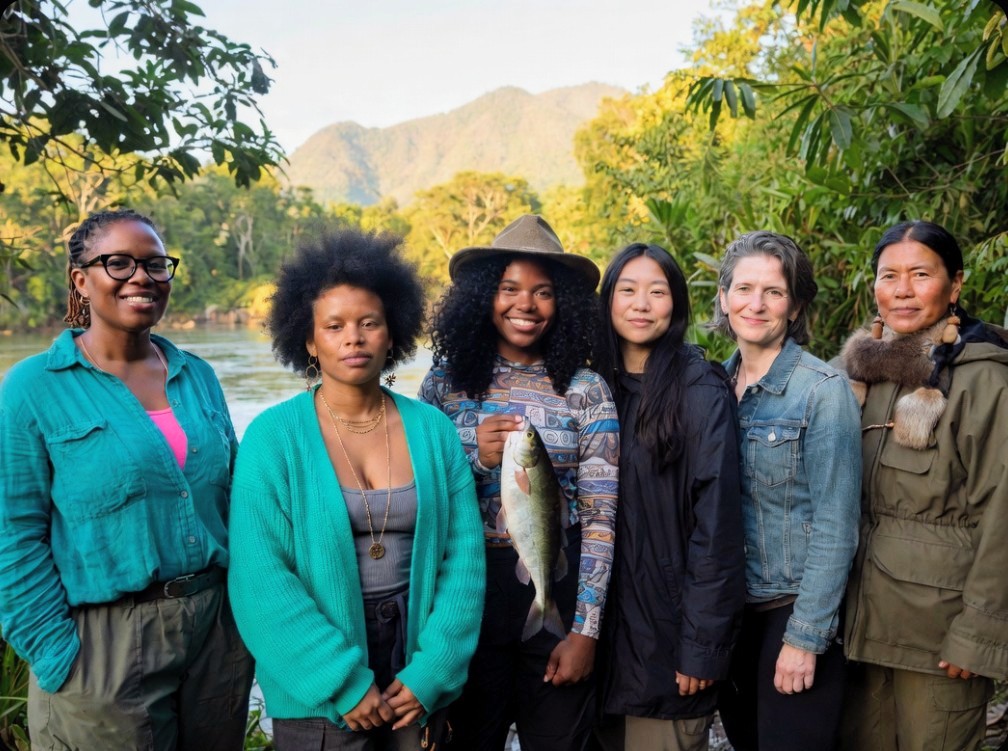
On April 20th, 2026, something quietly extraordinary happened. The Goldman Environmental Foundation announced its annual prize winners — six people recognized for extraordinary courage in the fight to protect this planet. For the first time in the prize’s 36-year history, every single recipient was a woman. Six women. Six continents. Six grassroots battles against extraction, pollution, and the slow grind of ecological erasure. Not one boardroom suit among them. Not one institutional talking head. Just people who looked at destruction and decided, with everything they had, to push back.
This is not a story about charity. It is a story about power — who holds it, who contests it, and what happens when ordinary people refuse to accept that the decisions destroying their land were ever made legitimately in the first place.
The Architecture of Grassroots Earth Defense
In Nigeria, conservation ecologist Iroro Tanshi built a community-led wildfire prevention system deep in one of the country’s last remaining rainforests — not by deploying NGO consultants or filing permit applications with indifferent ministries, but by working alongside the communities who have lived in that forest for generations. The result: habitat protected for the critically endangered short-tailed roundleaf bat, and a model of locally-controlled conservation that no outside entity could replicate or revoke.
In Papua New Guinea, Theonila Roka Matbob spent years holding Rio Tinto — one of the most powerful mining corporations on earth — accountable for the ecological and social wreckage left behind by its abandoned Panguna copper mine. No global NGO launched that campaign. A single woman from a single community decided that accountability could not wait for the industry to police itself, and forced a remediation process that will shape how corporations abandon extraction zones for decades to come.
In Colombia, Yuvelis Morales Blanco was barely into her twenties when she organized her Afro-descendant community in Puerto Wilches to block two drilling projects that would have introduced commercial fracking to the country. She stopped it. Not a lawsuit from a distance. Not a press release from Geneva. An organized community saying no, and meaning it enough to make it stick.
Legal Terrain as a Battlefield
The 2026 Goldman Prize also marks a pivotal moment in how climate justice is being fought through law — not as a substitute for direct action, but as an extension of it. In South Korea, Borim Kim helped bring Asia’s first successful youth climate lawsuit, compelling the government to set more ambitious targets. The case did not fall from the sky. It was built from the bottom, argued by young people who understood that if courts exist as instruments of power, they can also be turned against the powerful.
In the United Kingdom, Sarah Finch won a landmark Supreme Court ruling that mandated fossil fuel projects must account for their full downstream climate impact — not just the emissions from extraction, but the emissions from burning the fuel that extraction produces. That ruling reshapes the legal logic of fossil fuel permitting across British law. It was not handed down by sympathetic judges acting alone. It was pulled out of the system by a woman who refused to accept that the law only runs in one direction.
And in Alaska, Yup’ik leader Alannah Acaq Hurley mobilized tribal nations and allied groups to stop the proposed Pebble Mine megaproject from devastating Bristol Bay — one of the last great wild salmon ecosystems on the continent. The coalition she helped build was not a single organization with a single headquarters. It was a network of communities with a shared stake in the land, moving together without a single point that could be bought out or neutralized.
What Decentralized Power Actually Looks Like
The Goldman Prize winners of 2026 share something beyond their gender and their victories. They each represent a model of power that does not depend on vertical hierarchy, centralized funding, or the approval of institutions that profit from the status quo. They built horizontally — through community relationships, through coalitions with shared interests, through legal precedents that change the terrain for everyone who comes after. None of them waited for a political party to take up their cause. None of them asked permission from the entities they were fighting.
This is the architecture of decentralized resistance at its most concrete and most effective. It does not require a manifesto or a platform. It requires the recognition that the systems causing harm are not natural laws — they are choices, made by specific people with specific interests. And choices can be contested, reversed, and replaced by different choices made by different people with different interests. That is, at its core, what every one of these six women proved.
The Broader Moment
These victories land in a political landscape that is hostile, to put it mildly. The United States has once again withdrawn from the Paris Agreement. Fossil fuel extraction is being aggressively expanded in multiple jurisdictions. Environmental regulations dismantled in the name of economic growth. Corporate impunity for ecological harm is the working assumption in most of the world. And yet: communities in Alaska stopped a mine. A woman in Colombia stopped fracking. A court in London changed the legal logic of extraction. A rainforest in Nigeria has defenders who cannot be bought off because the defense was never for sale.
The Goldman Prize does not fix any of this. But it names something real: that the most durable environmental protection on this planet is not coming from the institutions that failed to prevent the crisis. It is coming from the people closest to the land, organized locally, acting with the clarity that comes from having everything to lose. Six women. Six continents. Six proof points that the decentralized front lines of earth defense are still very much alive.