When Russian missiles struck Ukraine’s largest thermal power plant in April 2024, plunging millions into darkness, something unexpected happened in the rubble. Communities didn’t wait for the state to restore power. They turned to the sun.
A Grid Built to Survive
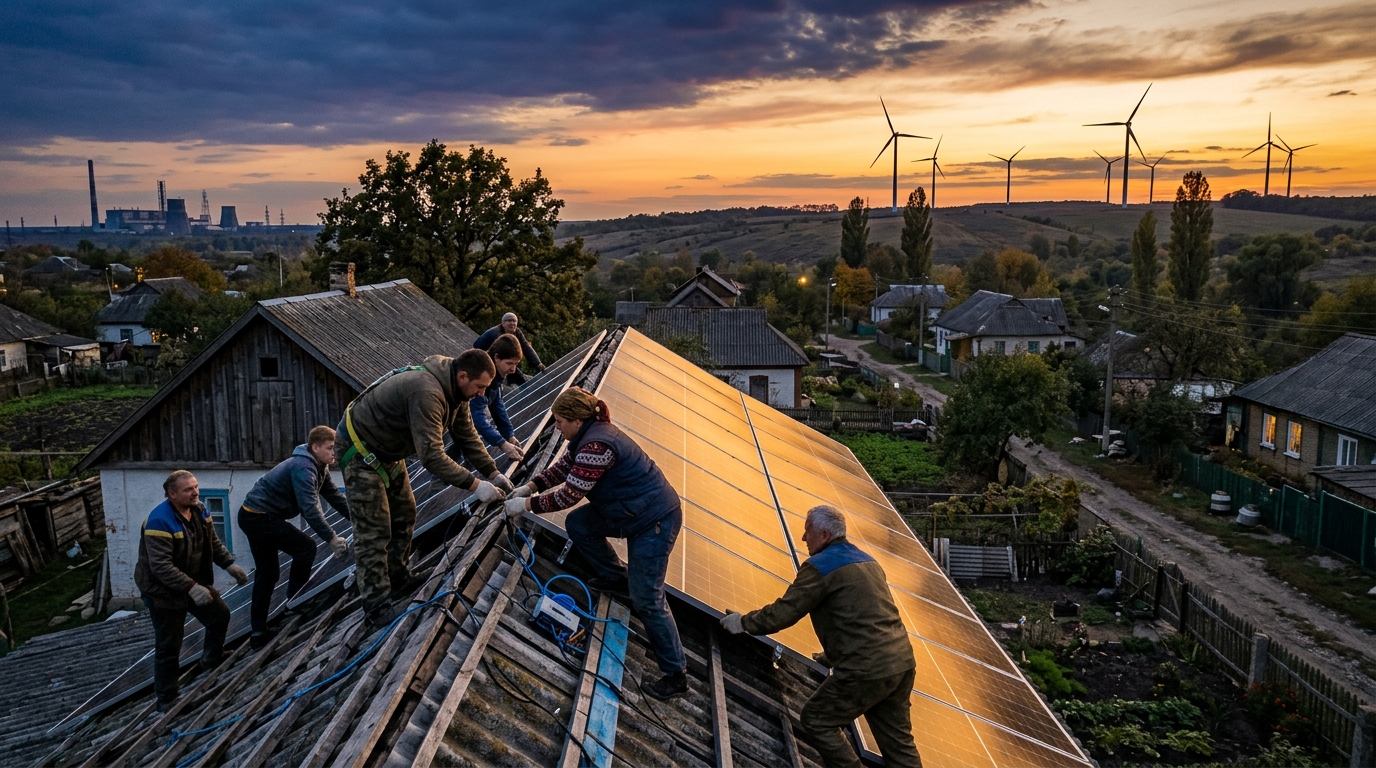
Ukraine has become, by necessity, one of the world’s most radical experiments in decentralized energy. Since the full-scale invasion began, the country has added over three gigawatts of new renewable energy capacity — not through grand centralized projects, but through thousands of rooftop solar arrays, neighborhood wind installations, and local battery storage systems that keep hospitals, schools, and community centers alive when the national grid goes dark. This is infrastructure as resistance. Every panel mounted on a village rooftop is a declaration: you cannot bomb us into submission by hitting a single target.
The logic is as old as guerrilla warfare itself — dispersal defeats concentration. A centralized power plant can be destroyed in one strike. Ten thousand distributed solar installations cannot. Ukraine’s energy engineers and community organizers have internalized this truth at the molecular level, building what the World Economic Forum has called a “frontline security” model of energy: resilient precisely because it is scattered, autonomous precisely because it is local.
Chornobyl’s Second Life
Perhaps nowhere is this transformation more striking than in the Chornobyl Exclusion Zone, a stretch of contaminated earth that has become one of Ukraine’s most unexpected energy frontiers. A solar plant began operating in the zone in 2025, built on the bones of a nuclear catastrophe that once symbolized the catastrophic fragility of centralized power. Now, officials are identifying sites for small modular reactors within the exclusion zone — not as a return to the old paradigm, but as a distributed, locally manageable complement to a solar-wind backbone. The site of the twentieth century’s most infamous technological disaster is being transformed into a laboratory for energy resilience. There is a dark poetry in that reclamation.
The “Solar Supports Ukraine” program, backed by European partners, has kept schools operational during sustained blackouts, ensuring that children learn by solar-powered light even when Russian strikes extinguish the national grid. The Tyligulska Wind Power Plant — five hundred megawatts being built near the front lines — represents the audacity of a people who refuse to stop building their future while fighting for the right to have one.
Infrastructure as Ideology
What Ukraine is demonstrating is not merely a technical workaround. It is a political philosophy expressed in kilowatts. Centralized infrastructure is, at its core, a concentration of power — economic, political, and literal. When it is controlled by a state or a corporation, it becomes a mechanism of dependency and vulnerability. The person who controls the grid controls the people connected to it. Decentralized energy severs that relationship. It redistributes not just electricity, but agency.
This principle is not unique to wartime. Community solar cooperatives, off-grid mutual aid networks, and neighborhood microgrids have long been championed by activists in the Global South, by Indigenous communities defending land sovereignty, by rural communities abandoned by privatized utilities. Ukraine is simply demonstrating — in the most extreme possible circumstances — what energy autonomy actually means in practice. When you own your power, you own something that cannot easily be taken from you.
The Solarpunk Blueprint
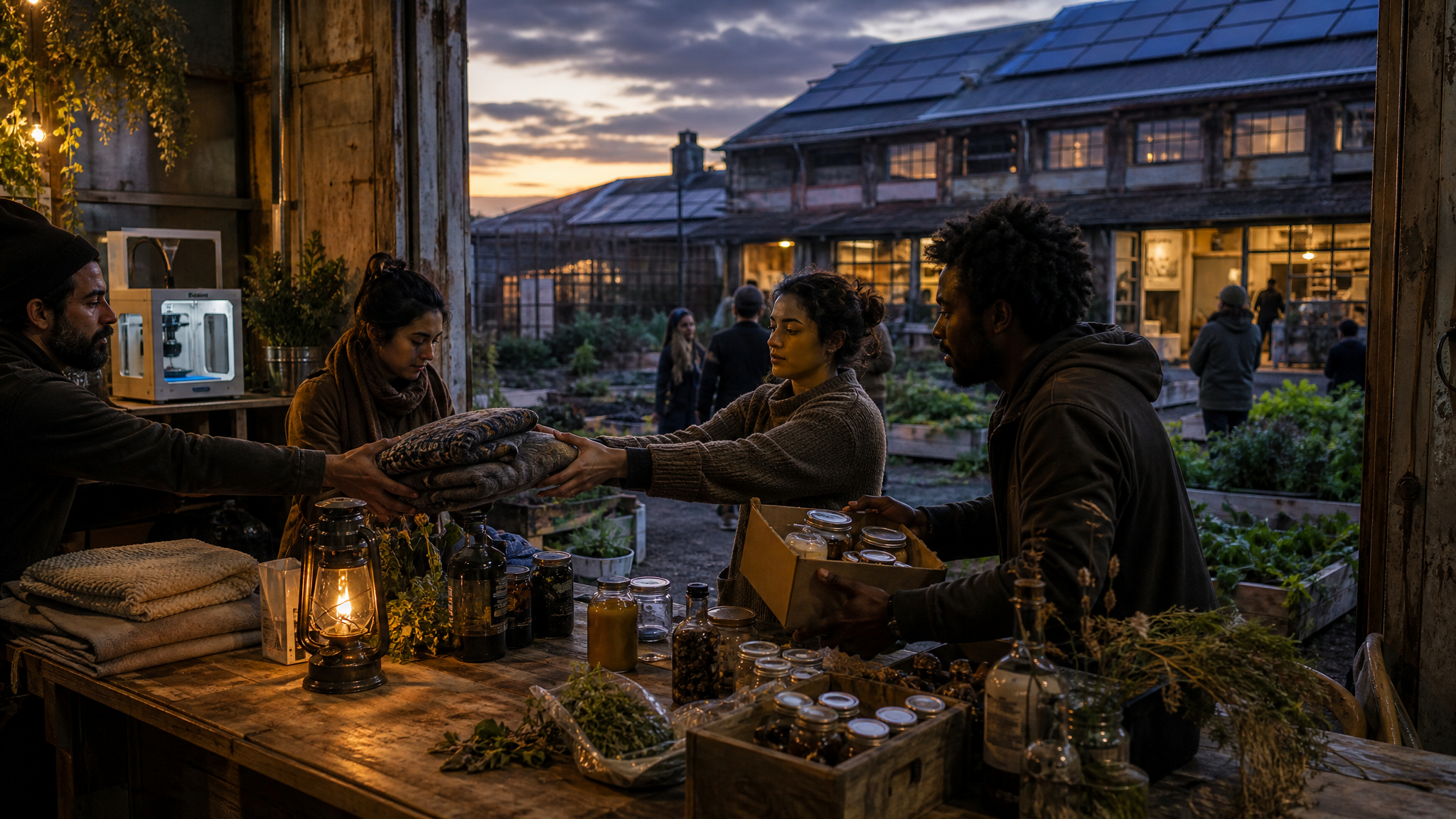
The solarpunk movement has long imagined exactly this: a world where green technology is not the property of corporations or states, but is woven into the fabric of community life. Where energy democracy and ecological sustainability are the same project. Ukraine’s wartime energy revolution, born from brutal necessity, looks strikingly like the solarpunk blueprint — not as aesthetics, but as survival strategy.
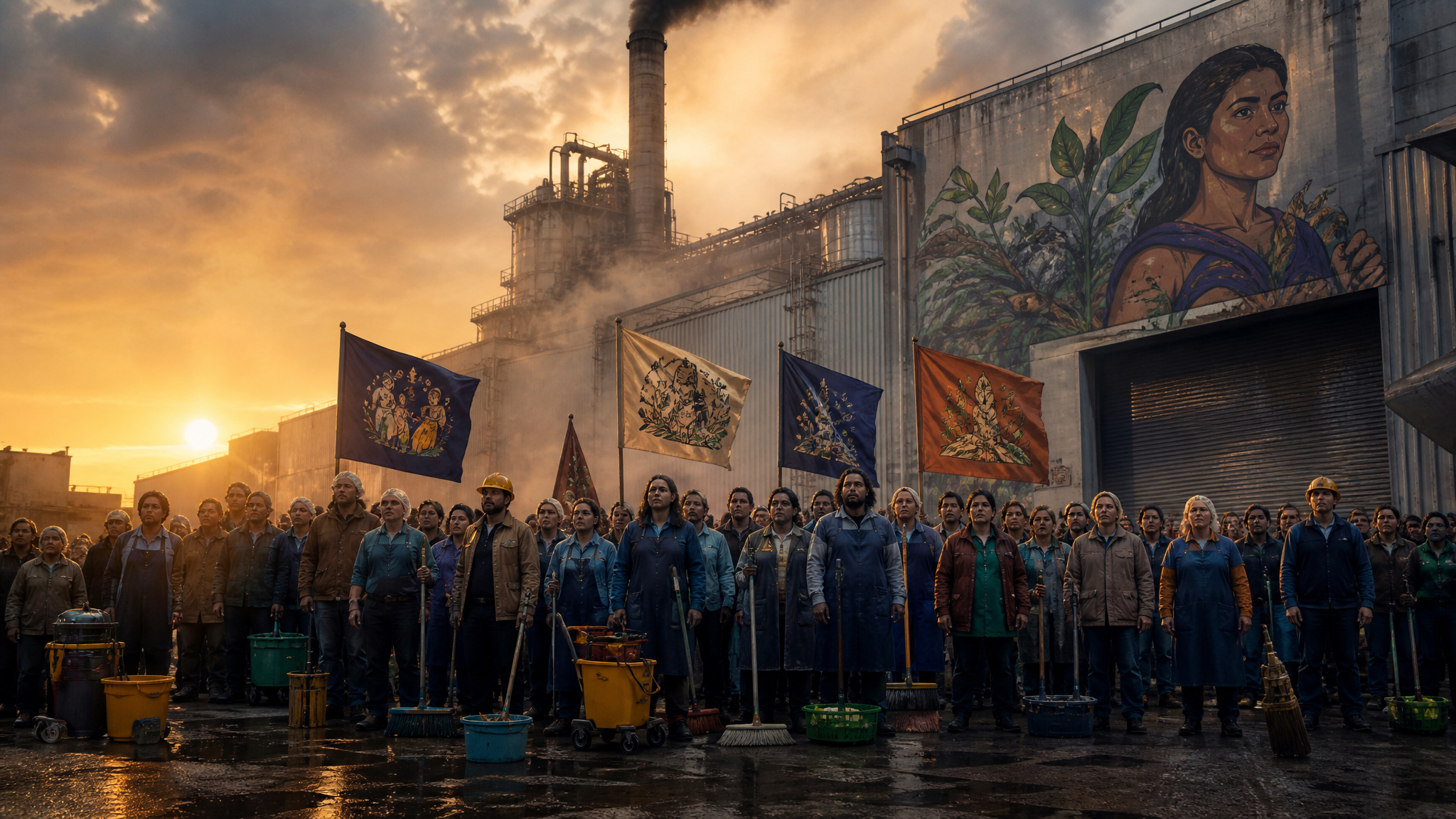
As the No Kings Coalition in the United States organizes community resilience trainings and prepares for May Day actions on May 1st, as communities across the globe build mutual aid networks and leaderless assemblies to resist authoritarian consolidation, the lesson from Ukraine’s rooftops is worth carrying forward. Decentralization is not a backup plan. It is the plan. It is what makes communities ungovernable by those who would rule through scarcity and darkness.
The sun does not negotiate. It rises regardless of who holds power, regardless of what was bombed the night before. Building the infrastructure to capture that light — collectively, locally, without waiting for permission — is one of the most radical acts available to any community facing a world that would prefer them dependent and afraid.
Build the Grid You Wish to See
Ukraine’s three-gigawatt renewable expansion is not a finished blueprint — it faces regulatory barriers, funding gaps, and the relentless pressure of ongoing conflict. But its core lesson is already proven and replicable: distributed energy systems are harder to destroy, easier to rebuild, and create communities that are genuinely more free. Every solar panel, every local wind turbine, every battery bank held in common is a node in a network of autonomy that no single actor can switch off.
We do not have to wait for catastrophe to build that kind of resilience. The movement has already started. In village halls and community gardens, in mutual aid networks and open-source tech collectives, people are learning to generate, share, and govern their own power. The grid of the future is not a single line running from one massive plant to a million passive consumers. It is a mesh — diffuse, adaptive, collectively owned, and impossible to darken with a single strike.
That is the future worth building. And the blueprints already exist — some of them written in solar-powered schoolrooms in Kyiv, some in community energy co-ops in rural Appalachia, some in off-grid villages in Kenya. The tools are available. The question is whether we will use them before necessity forces our hand.