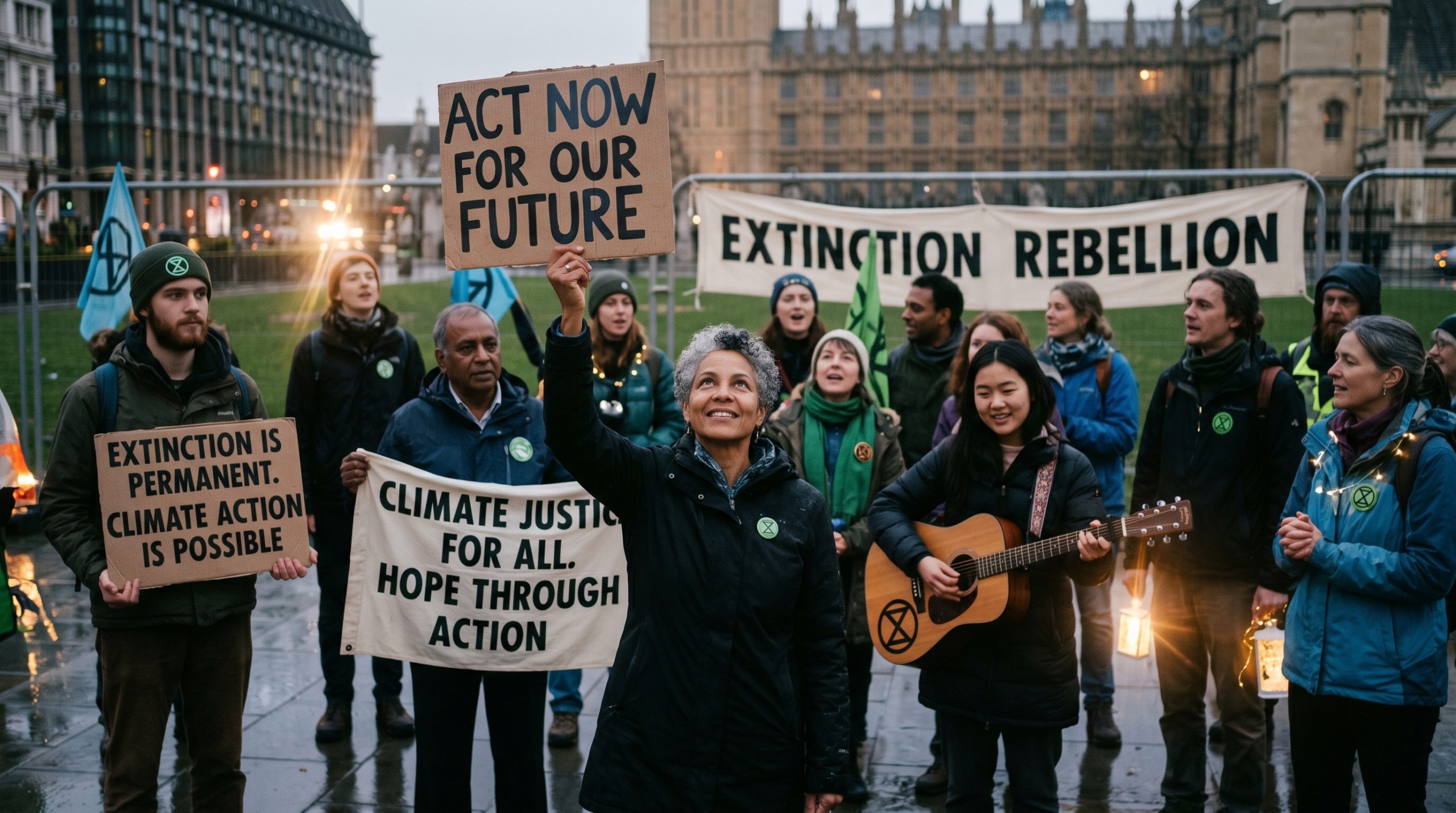
# Extinction Rebellion’s Evolving Tactics: A Resurgence for Social Justice
Extinction Rebellion (XR), the global environmental movement, has consistently pushed the boundaries of climate activism since its inception in 2018. While renowned for its highly disruptive tactics, the movement is undergoing a significant evolution, increasingly intertwining its core climate message with the vital pursuit of social justice. This strategic resurgence, marked by a decentralized approach and adaptive tactics, offers crucial lessons for grassroots autonomy and creative resistance worldwide.
## A Decentralized Force with Global Reach
XR’s rapid expansion, boasting over a thousand local chapters across 79 countries by mid-2021, is a testament to its decentralized, grassroots structure. This model empowers local groups to organize autonomously, fostering a sense of ownership and adaptability. While maintaining a shared set of core principles, local chapters can tailor their actions to specific regional contexts, making the movement incredibly resilient and far-reaching. This distributed organizational framework is a powerful example for other social justice movements seeking to build robust, community-led initiatives.
## Intersecting Climate Action with Social Justice
Traditionally seen through the lens of environmental protection, XR is increasingly highlighting the inseparable link between climate breakdown and social justice issues. The movement recognizes that environmental degradation disproportionately impacts marginalized communities, exacerbating existing inequalities. Some XR branches, particularly in the US, have boldly called for reparations and remediation for these communities, moving beyond a purely environmental narrative to embrace a holistic view of justice. This shift underscores a critical understanding: true environmental sustainability cannot be achieved without addressing systemic social injustices. For those engaged in decentralized activism, integrating social justice into their core messaging is not just ethical, but strategically essential for broader impact and solidarity.
## Adaptive Tactics for a New Era of Resistance
XR’s early campaigns were characterized by non-violent direct action and civil disobedience, aiming to create economic and civil disruption through tactics like road blockades and occupying public spaces. These actions, while effective in generating media attention and new memberships, often led to mass arrests.
However, a notable strategic shift announced in January 2023 indicates a move away from some of the more confrontational and disruptive tactics. The new approach prioritizes fostering relationships, increasing public participation, and building broader coalitions. This evolution demonstrates a pragmatic understanding that while disruption can raise awareness, sustained change requires deeper engagement and widespread support. This adaptability is a key lesson for any movement seeking long-term impact: be willing to evolve tactics based on efficacy and societal response, always keeping the ultimate goals in sight.
## Practical Lessons for Decentralized Activism
The journey of Extinction Rebellion offers several actionable insights for individuals and groups engaged in decentralized activism and creative resistance:
1. **Embrace Decentralization:** Empower local chapters and individuals to act autonomously within a shared framework of values and principles. This fosters resilience and broadens reach.
2. **Integrate Social Justice:** Explicitly connect environmental or other causes to broader social justice issues. Recognize and address the disproportionate impacts on marginalized communities.
3. **Strategic Flexibility:** Be prepared to adapt tactics based on effectiveness, public perception, and the evolving political landscape. Disruption can be a tool, but not the only tool.
4. **Community Building:** Prioritize fostering relationships and building broad participation over solely relying on confrontational actions. Engage diverse communities and stakeholders.
Extinction Rebellion’s resurgence as a force for both climate action and social justice provides a compelling blueprint for how decentralized movements can evolve, remain relevant, and drive meaningful change in an increasingly complex world. Their commitment to adaptation and an expansive vision of justice serves as an inspiring example for all those working towards a more equitable and sustainable future.
**Join the movement for change! Explore tactics for grassroots autonomy and creative resistance on ICFAR.com and share your experiences.**