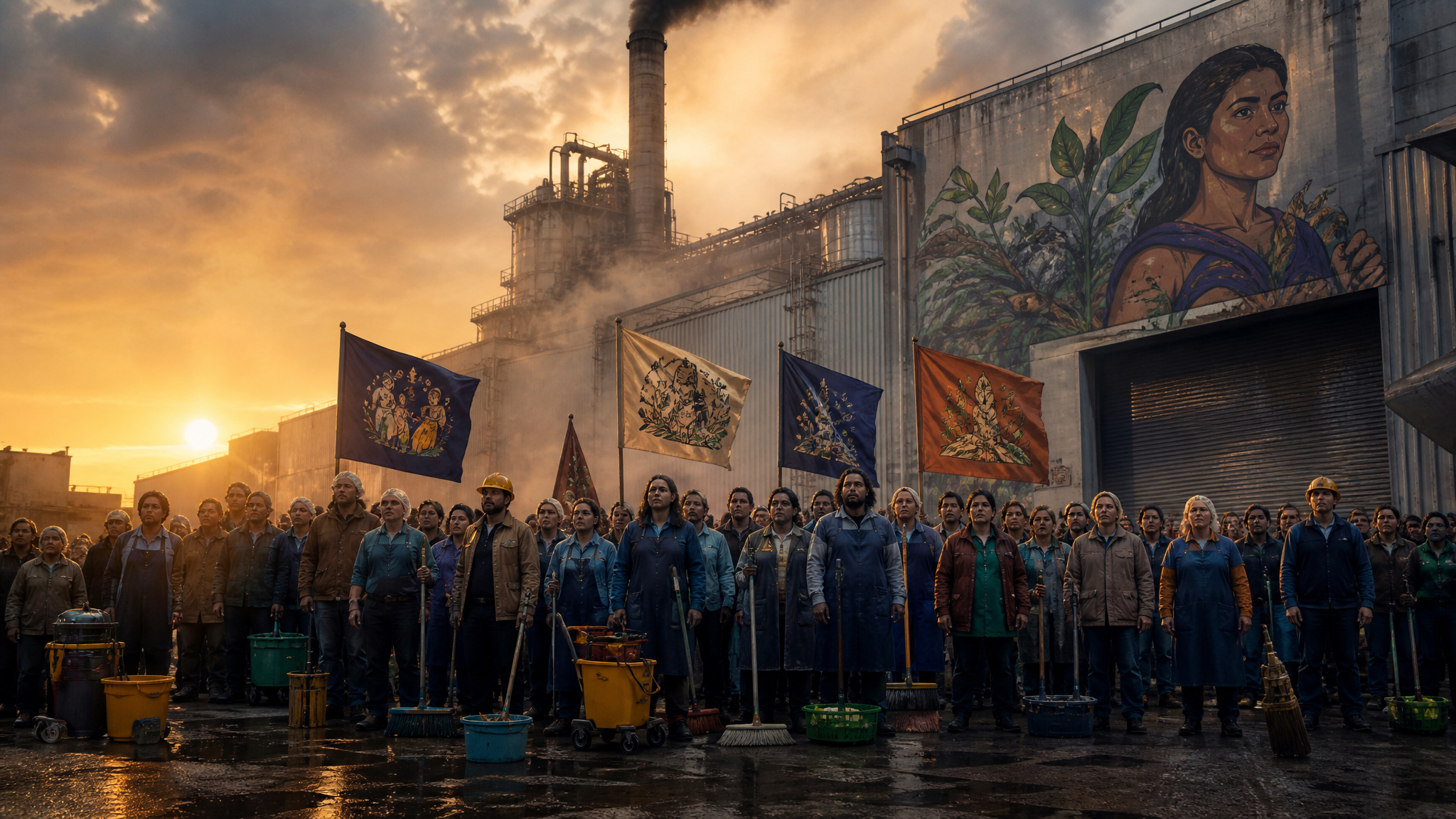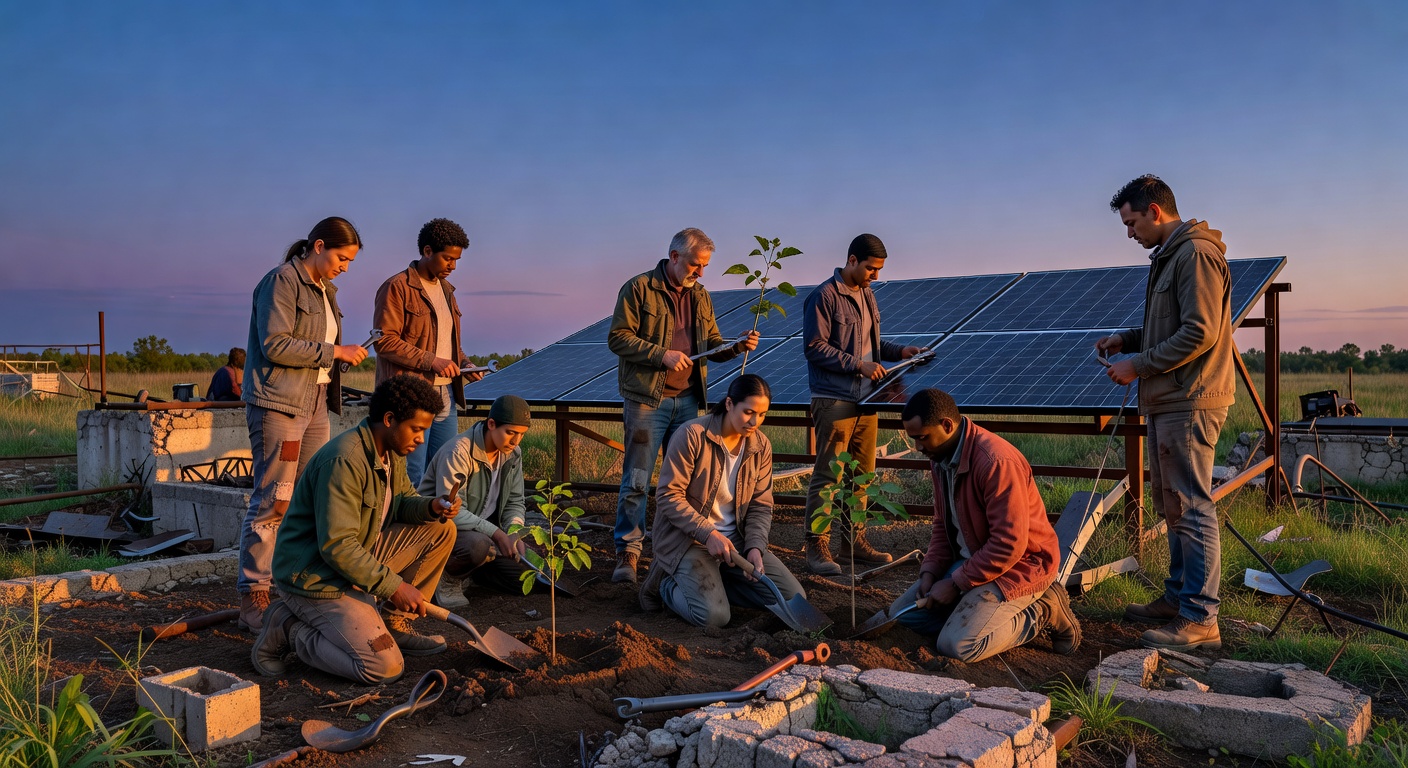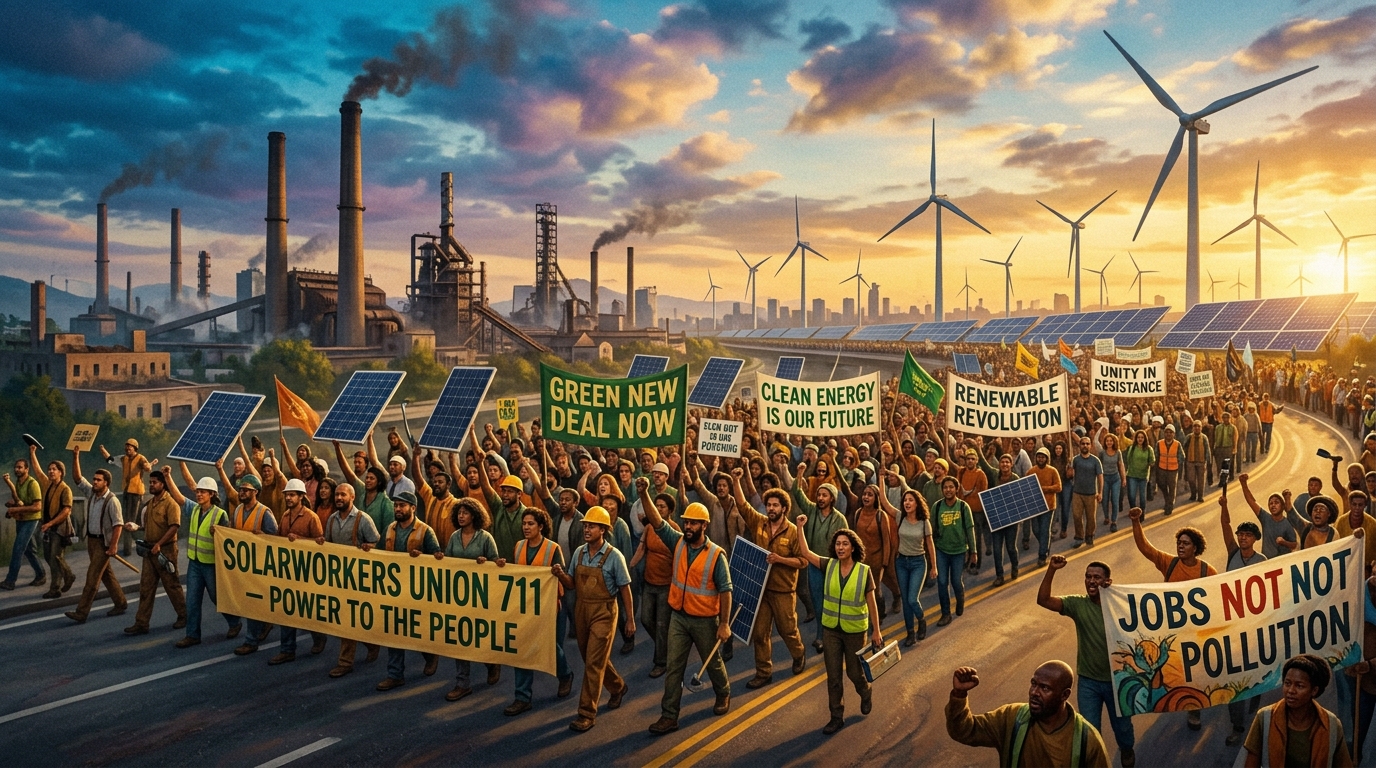
Something is shifting in the bones of the resistance. For decades, the labor movement and the climate justice movement have marched in parallel — sharing enemies, sharing grief, occasionally sharing streets — but rarely sharing strategy at the scale that history demands. In April 2026, two developments separated by an ocean and a week are signaling that this fragmentation may finally be ending. The convergence of organized labor and climate direct action is not a trend. It is a reckoning.
Union Now and the Return of Worker Power
On April 12th, a coalition of some of the most prominent labor organizers in the United States unveiled Union Now, a new non-profit built with one brutal, clarifying purpose: to get unions into the hands of the 70 percent of American workers who want one but don’t have it. Sara Nelson, president of the Association of Flight Attendants-CWA, put it plainly: if union density were a product and 70 percent of the market wanted it, any company would have already figured out how to deliver it. The labor movement has to think the same way.
The numbers behind this initiative are staggering in what they reveal. Union density in the United States peaked above 30 percent in the 1950s. By 2025, it stood at 10 percent — even after reaching a 16-year high. Decades of legislative sabotage, corporate union-busting, and the deliberate offshoring of organized industries have hollowed out the movement. Union Now aims to provide mobilizing workers with financial resources that individual unions — stretched thin between representing current members, fighting contract battles, and running organizing drives — simply cannot spare alone.
This is not a boutique reform project. It is an acknowledgment that the existing structure of labor solidarity cannot sustain the moment. Workers are being asked to organize under conditions of mass surveillance, illegal firings, and retaliatory intimidation. Union Now is designed to absorb that cost — to make it possible for workers to stand up even when the boss has more lawyers than the shop has members. Power, Nelson said, belongs in the hands of people. That sentence is a philosophy, not a slogan.
Santa Marta and the Fossil Fuel Treaty
While Union Now was launching rallies in New York, the governments of Colombia and the Netherlands were finalizing preparations for something equally historic: the First Conference on Transitioning Away from Fossil Fuels, convening April 24–29 in Santa Marta, Colombia. Eighteen nation-states have already signed onto the development of a Fossil Fuel Treaty, and this conference marks the first in what is envisioned as a sustained series — a parallel track to the UNFCCC that can actually name the problem the Paris Agreement has carefully avoided: the unchecked extraction of coal, oil, and gas.
The framing coming out of Santa Marta is deliberately unambiguous. Three decades of international climate negotiations have managed emissions while ignoring the fuel that produces them. Consensus-based structures have allowed industry-backed governments to stall, dilute, and delay. The Fossil Fuel Treaty initiative is built to break that deadlock — operating outside traditional climate architecture, it is designed as a coalition of the willing rather than a consensus of the bought. The language from its architects is striking: the transition must be fast, fair, and financed. It must strengthen energy sovereignty. It must support workers and communities. It must leave no one behind.
That last phrase is not incidental. It is the hinge point between climate justice and labor solidarity. Every coal community told to simply adapt, every refinery worker handed a pink slip and pointed at a retraining program that doesn’t exist — these are the fracture lines that have kept the two movements from fully trusting each other. A fossil fuel phase-out that is fast but not fair is not a victory. It is a different kind of abandonment.
The Architecture of a New Front
What makes this moment different is not just that labor and climate are speaking similar words. It is that the structures being built — Union Now, the Fossil Fuel Treaty framework, mutual aid networks scaling across crisis zones from Sudan to Milwaukee — are beginning to share an underlying architecture. They are all, in essence, projects of distributed power: systems designed to function without depending on a single leader, a single institution, or a single nation-state to make the call.
The fossil fuel economy was built by concentrating power — in corporations, in petrostates, in financial systems so deeply entangled that no one actor was ever fully responsible for any harm. The movements dismantling it have to work differently. They have to build power that is cellular, redundant, rooted in mutual accountability. Union Now is not trying to resurrect the AFL-CIO of the 1950s. The Santa Marta conference is not trying to fix the UNFCCC. They are building the next thing: infrastructure for a world where the workers and the earth are recognized as having the same stake in the outcome.
That world does not arrive by waiting for permission. It arrives because people decided to stop asking for it. The labor-climate alliance rising in 2026 is not a coalition statement. It is a construction project — and the blueprint is already on the table.