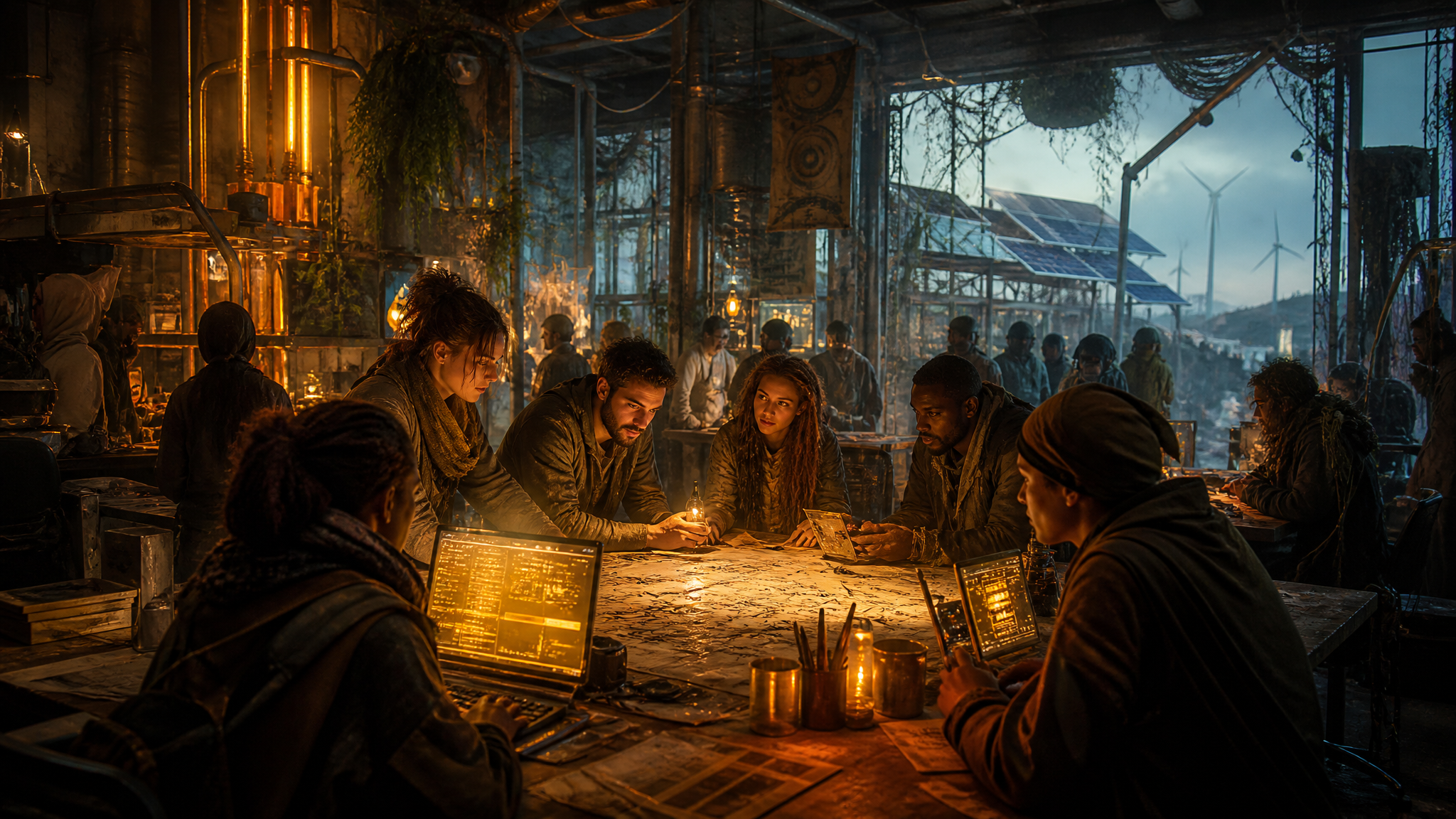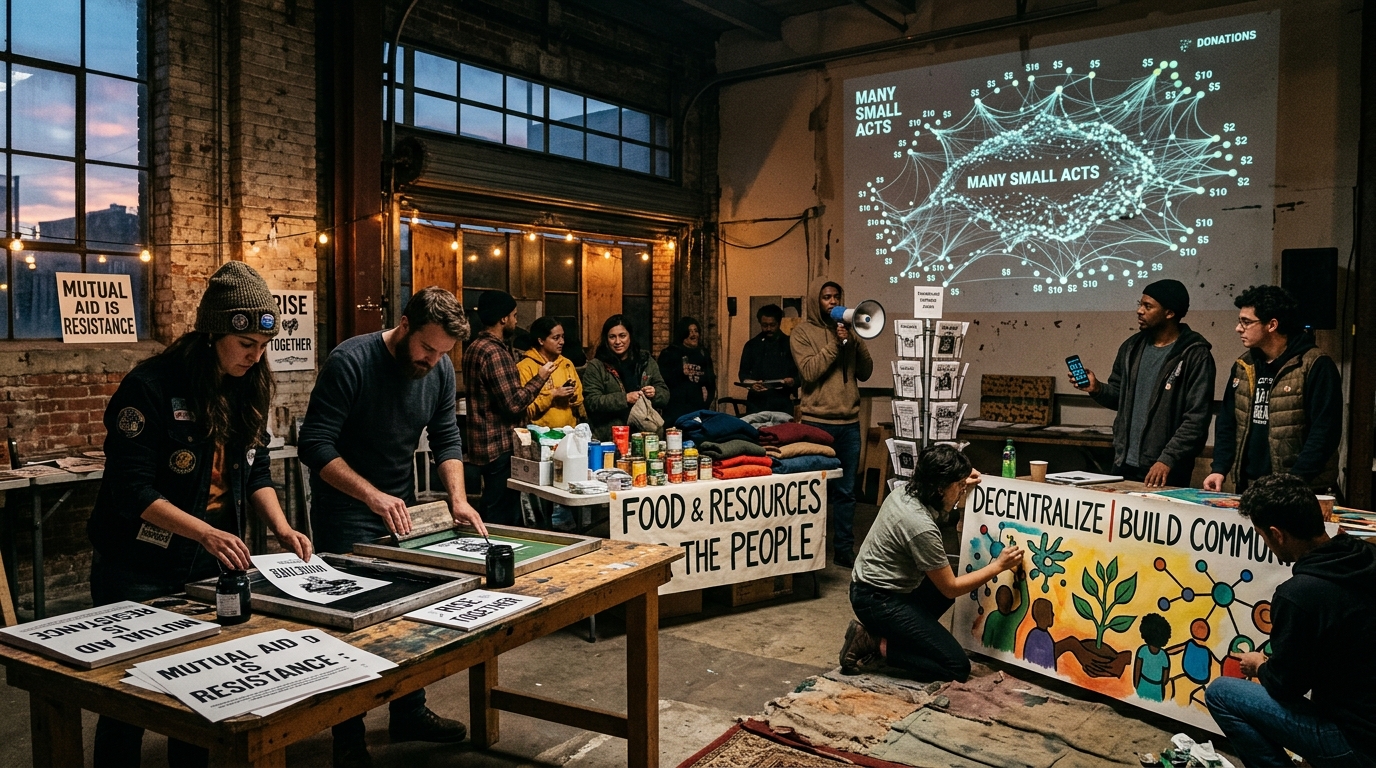
Movements do not become durable because they produce one perfect march, one viral video, or one charismatic spokesperson. They become durable when they learn how to stack thousands of small acts into a system that can keep moving under pressure. That is the real lesson running through this week’s organizing news, from prison abolition art spaces to anti-war statehouse campaigns to massive grassroots fundraising networks. The future of resistance belongs to movements that know how to turn participation into infrastructure.
That matters because repression often assumes people will burn hot, then burn out. Institutions know how to wait out outrage. What they fear is something more practical: a movement that can recruit, teach, fund itself, communicate across distance, and keep generating pressure through many different points of entry. Not just spectacle, but continuity.
Stop chasing scale, start designing for contribution
The most useful organizing question is not, “How do we get everyone to do the same thing?” It is, “How do we make it easy for more people to do something meaningful?” The American Friends Service Committee’s latest State House Watch makes this plain. Their call is not for one narrow form of participation. It invites people to pressure Congress, protest, disrupt, bear witness, sing, educate, and show up for local legislative fights. That kind of menu matters. It recognizes that movements grow when people can enter at different levels of risk, time, and skill.
If your campaign only values the loudest action, it shrinks itself. If it creates multiple lanes for action, it becomes harder to isolate and easier to sustain. One person can make phone calls. Another can design flyers. Another can bring food. Another can host a teach-in on public budgets and militarized spending. Another can document abuses. Another can donate five dollars every month for a year. None of these acts look revolutionary on their own. Together, they create operational depth.
Creative resistance is not decoration, it is logistics for memory and courage
Too many organizations still treat art as branding for “real” political work. That is a mistake. The work of Let’s Get Free’s Creative Resistance project shows why. Their exhibition, poetry publishing, and traveling art collection do more than communicate a message. They create containers for memory, grief, dignity, and political education, especially for people targeted by incarceration. Art builds culture, and culture is what helps a movement survive fear.
A banner can become a meeting point. A poem can carry testimony across walls. A local art show can become a fundraiser, a recruitment event, and a political education space all at once. This is practical movement design, not aesthetic garnish. If your organizing infrastructure has no way to help people feel, remember, and imagine together, then it will struggle to hold people when repression, exhaustion, or despair arrive.
Grassroots money is a signal, not just a resource
The Texas Tribune’s report on James Talarico’s record-breaking $27 million grassroots haul is striking not only because of the total, but because of the structure behind it: hundreds of thousands of contributors spread across hundreds of counties. That is not merely money. It is proof of distributed buy-in. It shows what becomes possible when a campaign makes participation repeatable and legible at scale.
Activist formations should study that lesson carefully. Financial support is not separate from organizing. It is one expression of trust. Small recurring contributions can function like movement telemetry, revealing where energy is building and whether people believe the project is worth sustaining. When communities fund the work themselves, even partially, they reduce dependency on fragile gatekeepers and increase their room to maneuver.
A practical playbook for stronger local networks
If you want to build more resilient decentralized organizing right now, start with four concrete moves:
First, map participation lanes. List every useful role in your campaign, from research and art to childcare and direct action support. Make it simple for new people to enter.
Second, create repeatable rituals. Weekly calls, public workshops, neighborhood banner drops, budget teach-ins, and mutual aid distributions all help convert one-time outrage into reliable rhythm.
Third, build cultural assets. Publish zines, collect oral histories, host exhibits, share songs, archive testimony. These are not extras. They are how movements remember what they are fighting for.
Fourth, normalize small recurring support. Ask for modest monthly contributions, shared supplies, volunteer hours, and micro-commitments. Durable movements are rarely carried by one wealthy donor or one heroic organizer. They are carried by many people choosing to keep showing up.
The point is not to imitate any one organization. It is to recognize a larger pattern. Across very different struggles, the strongest formations are learning the same lesson: decentralization works when it is concrete. Give people roles. Give them tools. Give them ways to care for one another. Give them symbols worth carrying. Give them a reason to return next week.
That is how resistance outlasts the news cycle. Not by waiting for a perfect moment, but by building systems where thousands of imperfect contributions can move in the same direction.