The New Frontlines Are Encrypted
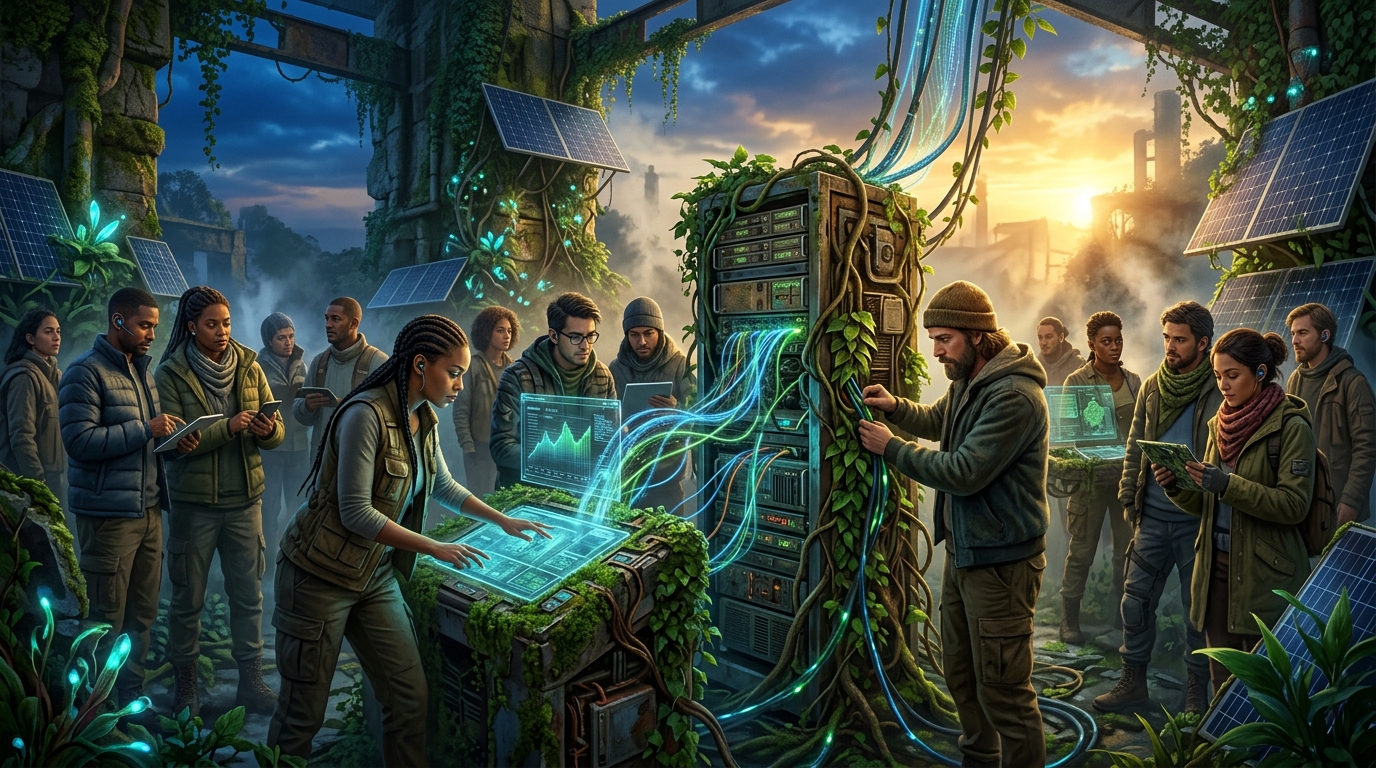
Something significant happened today. Tuta Drive — a quantum-resistant, zero-knowledge encrypted cloud storage platform — entered its closed beta, quietly marking a milestone that most mainstream outlets will ignore. Built under the “PQDrive” project with a €1.5 million grant from the German government and developed in collaboration with the University of Wuppertal, Tuta Drive employs a hybrid encryption protocol designed to resist not just today’s surveillance apparatus, but the quantum computers that governments and corporations are racing to deploy tomorrow. This is not a product launch. It is a declaration.
For activists, journalists, organizers, and anyone operating outside the tolerance of power, the arrival of quantum-safe tools is not an abstraction — it is a lifeline. The era when basic encryption was considered paranoid is long over. In 2026, the question is not whether your communications are being monitored, but whether your encryption will hold when the next generation of decryption machines comes online. Tuta’s answer is to build the shield before the sword arrives. Their zero-knowledge architecture means the company itself cannot access user files. No ads. No tracking. No AI mining your data. A private digital workspace for people who understand that privacy is not a luxury — it is a precondition for free thought.
The Body That Cannot Be Bought
Meanwhile, across 24 U.S. states, something equally remarkable is unfolding in church halls, school board meetings, and community forums: ordinary people are saying no to the hyperscale AI data center boom — and winning. A research firm called Data Center Watch is now tracking 142 organized activist groups that have collectively blocked or significantly delayed $64 billion in data center construction over the past two years. These are not abstract policy victories. These are communities who looked at the noise, the water draw, the power demands, and the creeping industrialization of their landscapes — and organized.
This movement has no single leader, no national headquarters, no PAC. It is exactly the kind of decentralized, issue-specific resistance that the established political class cannot absorb or redirect. Local governments are being moved. Zoning fights are being won. The companies building the infrastructure of AI surveillance are discovering that community consent is not a foregone conclusion — it must be fought for, and it can be denied. Each community that says no is not just protecting its groundwater or its quiet. It is asserting that the direction of technological development is a political question, and political questions belong to the people who live with the consequences.
Legal Ground for the Ungovernable
In a development that rarely makes activist news, Alabama recently became the second U.S. state — after Wyoming — to formally grant legal standing to Decentralized Autonomous Organizations under the Decentralized Unincorporated Nonprofit Association (DUNA) Act. For DAOs with at least 100 members united around a common nonprofit purpose, this means full legal standing: the ability to hold contracts, own property, and operate with institutional legitimacy without ceding control to a centralized authority. This matters not as an endorsement of blockchain speculation, but as a signal — the legal infrastructure of self-governance is being quietly assembled in spaces power has not yet thought to police.
The Movements platform, a civic technology project that just secured €390,000 in pre-seed funding, offers a parallel vision: organizing tools and strategic support that were once available only to well-funded institutions, handed directly to grassroots campaigns. In Spain, one such campaign gathered 100,000 signatures defending public healthcare and reached parliament in under five weeks. The tools of institutional power are being democratized — not by waiting for permission, but by building alternatives that make the old gatekeepers irrelevant.
What This Moment Is Asking of Us
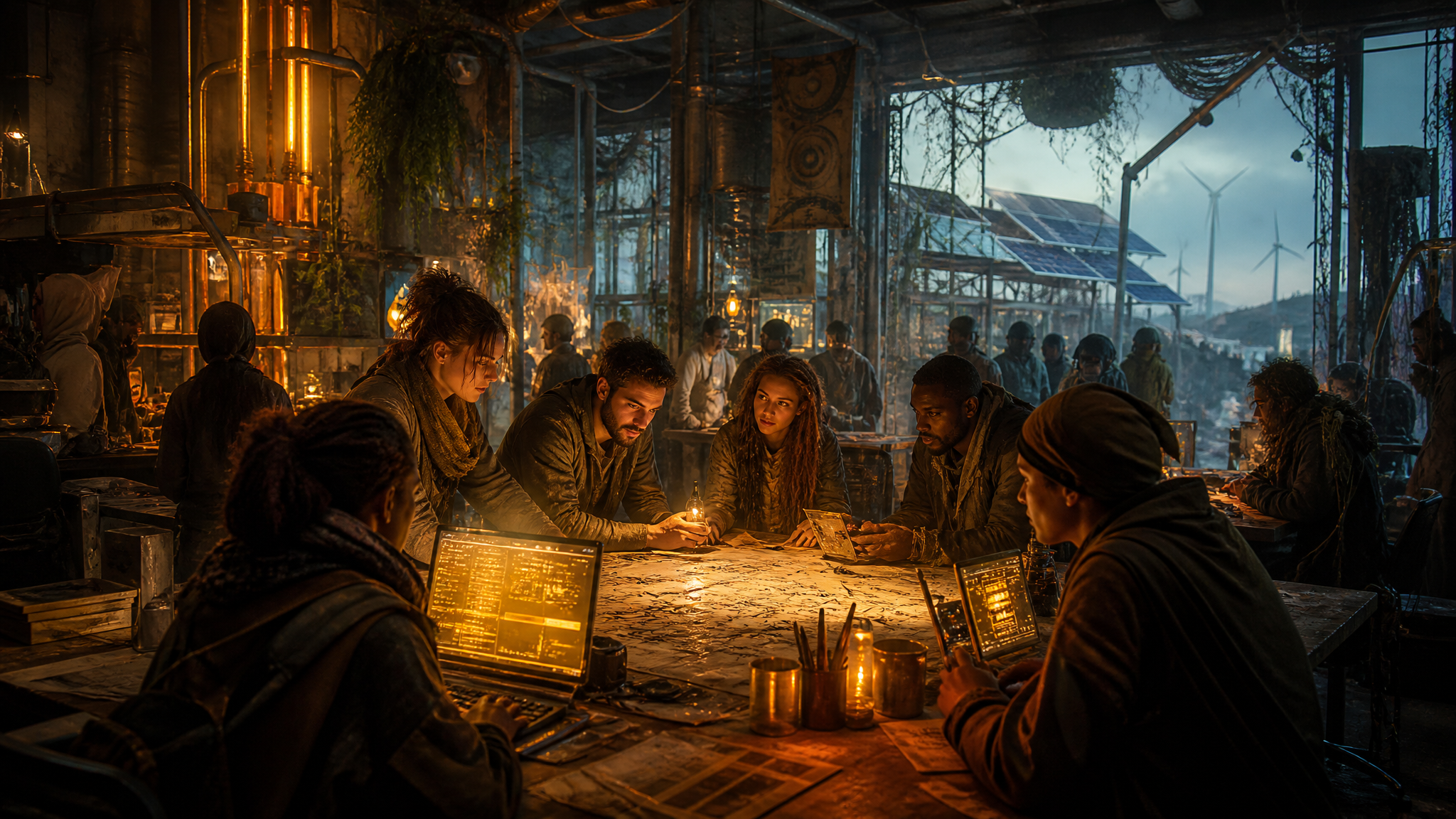
The convergence of quantum-resistant privacy tools, decentralized legal frameworks, and community-driven organizing is not a coincidence. It is the architecture of a world being built in the gaps that power has not yet sealed. This is the solarpunk promise made concrete: not utopia handed down from above, but resilience constructed from below, with the materials at hand.
The encrypted drive, the zoning hearing, the DAO vote, the mutual aid table — these are not separate struggles. They are the distributed cells of a larger body refusing to be made legible to systems of control. Every community that blocks a data center, every organizer who encrypts their communications, every neighborhood that builds mutual aid before the crisis hits, is participating in the same long project: the creation of a world that does not depend on the permission of those who would rather you remained trackable, legible, and dependent.
The question being asked of this generation is whether we will build that world fast enough. The tools are arriving. The communities are organizing. The legal frameworks are, slowly and imperfectly, catching up. What remains is the will to use them — not waiting for a perfect moment, but treating this one as sufficient. The infrastructure of liberation does not announce itself with fanfare. It launches in closed beta. It wins at a zoning board. It files paperwork in Alabama. And then, one day, it is simply the world we live in.