The Architecture of Refusal
When centralized communication grids go dark—whether from state decree, corporate failure, or climate catastrophe—something older and more stubborn wakes up. Across rooftops in São Paulo, in the hills above Athens, and in the forgotten corners of post-industrial American cities, people are stitching together open-source mesh networks that refuse to die when the towers do. These are not consumer gadgets. They are living infrastructure: radios, antennas, and protocols held together by the same hands that once built barricades.
From LoRa to Liberation
The technical foundation is deceptively simple. Long-range, low-power protocols like LoRa and Meshtastic allow small devices to relay messages across kilometers without any cellular tower or internet backbone. What began as hobbyist experiments has matured into something more dangerous to authority: redundant, encrypted, and impossible to fully map. In 2025, activists in Hong Kong and Belarus demonstrated that these networks could survive targeted infrastructure attacks that crippled commercial systems for days. The mesh does not ask permission. It simply continues.
Mutual Aid as Protocol Design
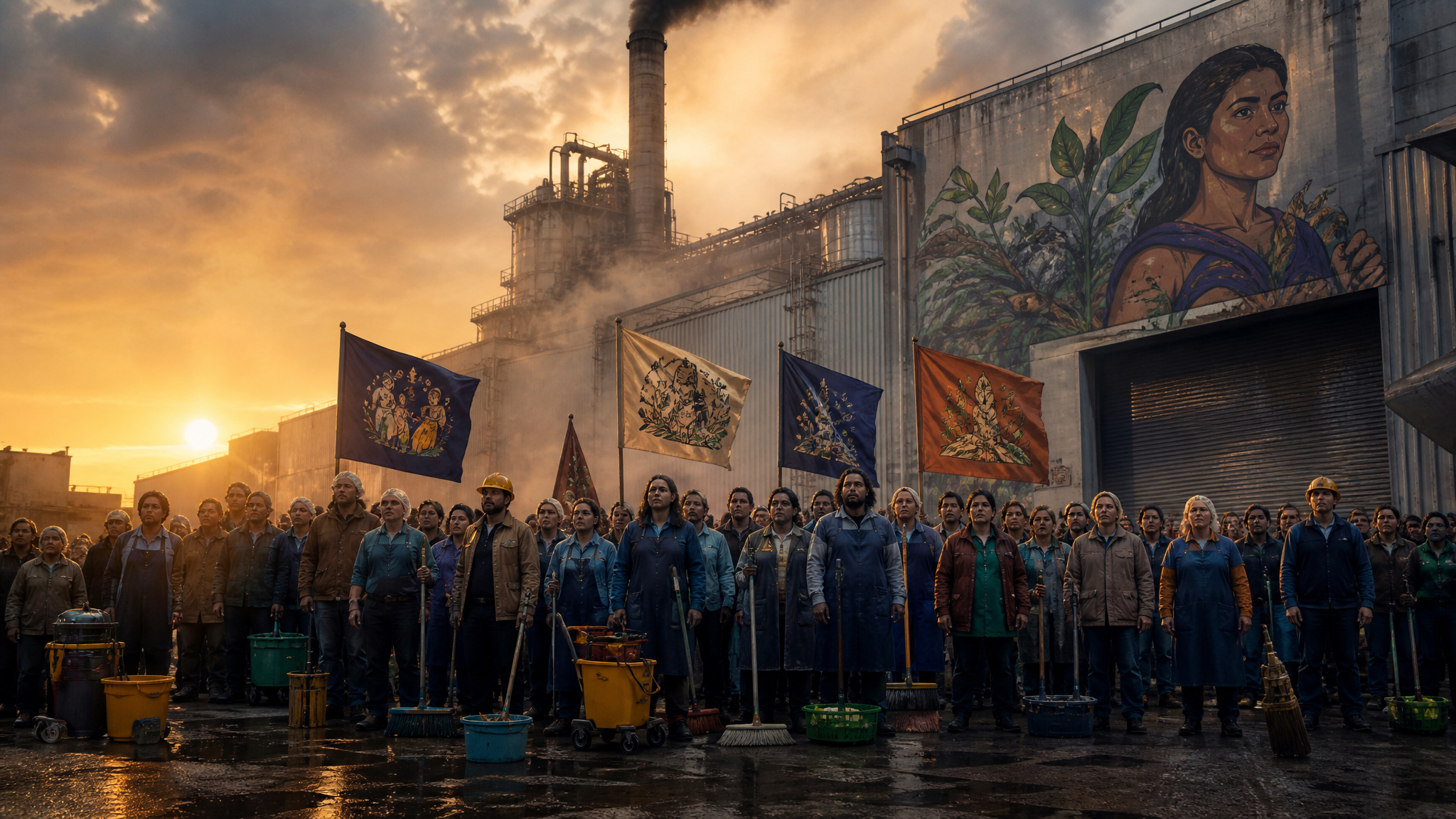
Every node in a true mesh network embodies a principle that centralized systems have tried to erase: mutual aid is not charity. It is survival architecture. When one device fails, others route around it. When one person is targeted, the network reconfigures without hierarchy. This mirrors the best traditions of decentralized resistance—leaderless movements that cannot be decapitated because they were never crowned. The same logic that lets a warehouse worker become a firewall against AI surveillance now lets a neighborhood become its own telegraph office.
The Solarpunk Signal
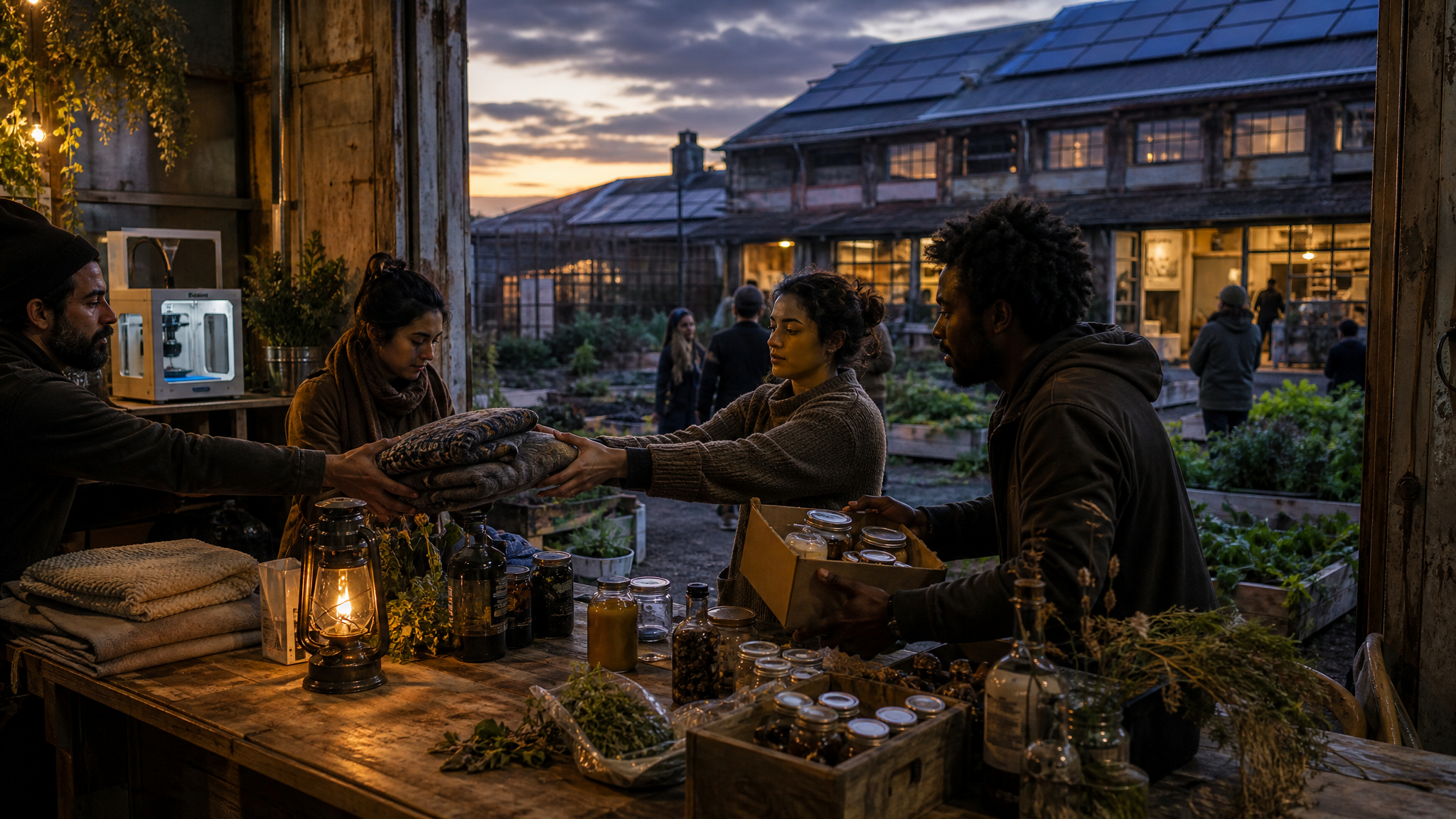
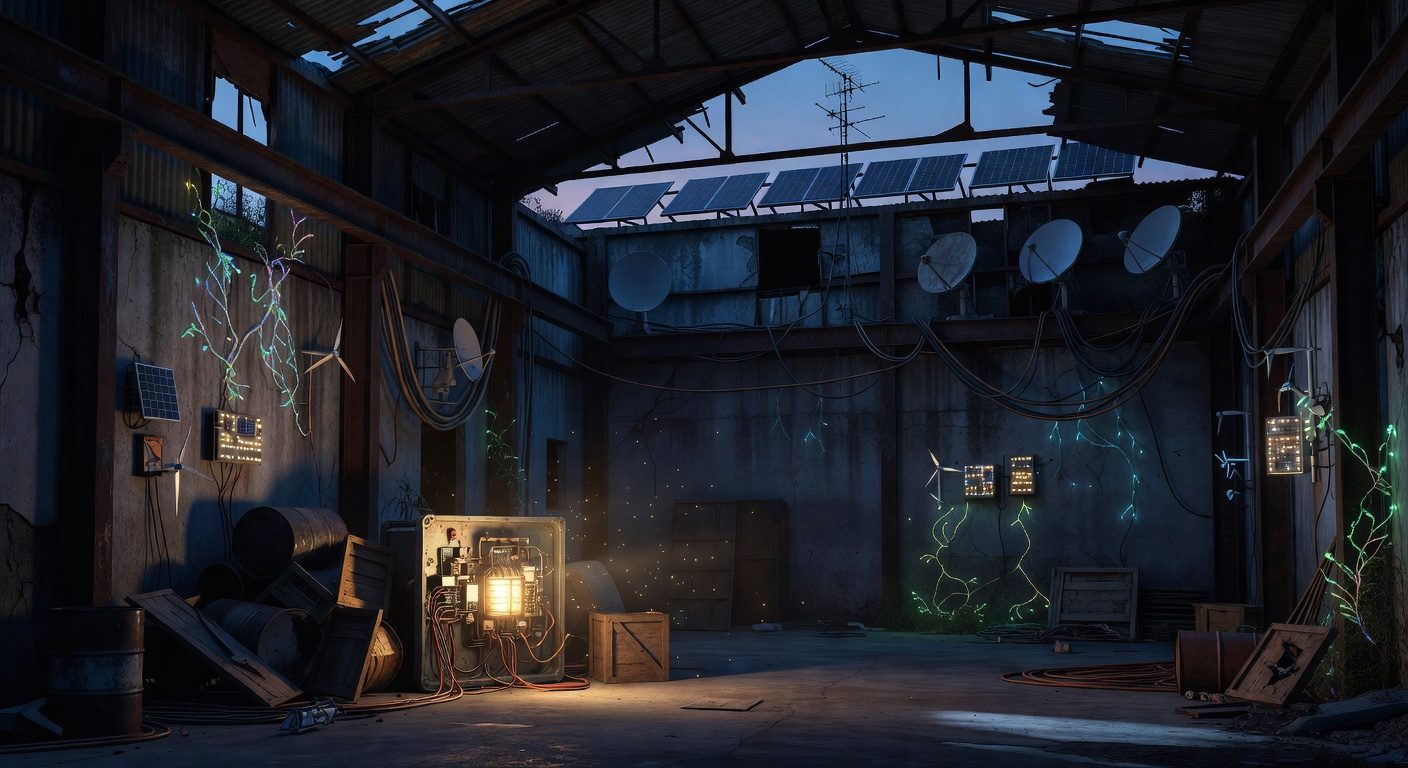
These networks are not merely defensive. They carry the seeds of something brighter. In places where the grid has already failed or been abandoned, mesh systems are being paired with solar micro-grids, rainwater collection, and community data archives. The aesthetic is unmistakable: battered satellite dishes sprouting tomato vines, battery banks humming beside hand-built greenhouses, encrypted traffic moving through the same frequencies once reserved for military use. This is solarpunk not as fantasy, but as salvage. The future being built in these spaces is not sleek chrome—it is rust, copper, and stubborn green pushing through concrete.
Against the Capture of Everything
States and corporations are already moving to criminalize or regulate these tools. New spectrum laws, device certification requirements, and critical infrastructure designations are being drafted to bring the mesh back under control. Yet the same qualities that make these networks valuable to power also make them difficult to extinguish. They are cheap. They are portable. They are built from parts that can be scavenged or 3D-printed. Most importantly, they are maintained by people who have already decided that their freedom is worth more than compliance.
The Signal Continues
The towers will fall again. They always do—whether from the next hurricane, the next blackout, or the next attempt to silence dissent. When they do, the question will not be who owns the spectrum. It will be who remembered how to speak without asking. The mesh networks being woven today are not waiting for permission. They are already answering.