In the high desert of Box Elder County, Utah, something extraordinary happened on a Monday night in late May 2026. An estimated five hundred residents — ranchers, teachers, retirees, young families — packed a county fairgrounds to confront their elected commissioners over a vote that could reshape the land, the water, and the air of their home for generations. When the vote passed unanimously to proceed with a sprawling hyperscale AI data center project, the crowd answered with a chorus of “Shame! Shame! Shame!” It was not a polished demonstration. It was not organized by a national NGO. It was the raw, unmediated voice of a community that refuses to be erased.
The Machine in the Desert
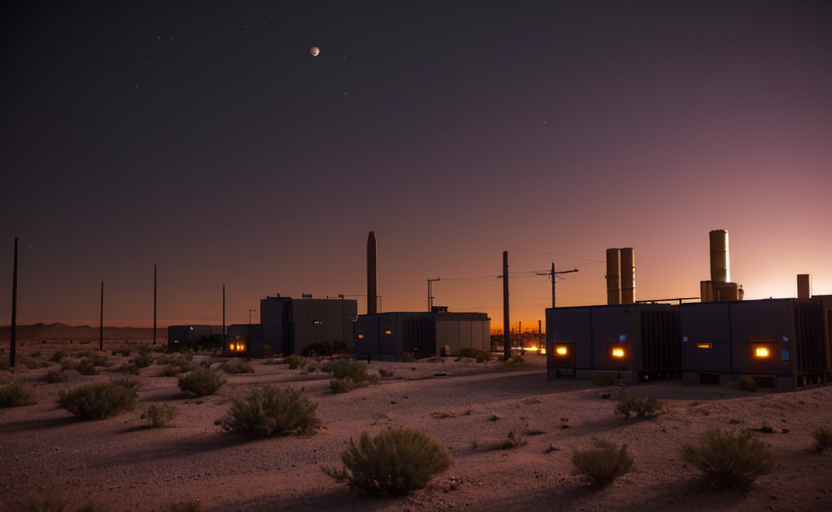
The project, marketed under the whimsical name “Wonder Valley” by celebrity investor Kevin O’Leary, is anything but whimsical in its ambitions or its costs. Spanning more than forty thousand acres of northern Utah — a footprint larger than two and a half Manhattans — the proposed complex would require nine gigawatts of electricity to operate its server farms. That is more than twice the current total electricity consumption of the entire state of Utah. The power source? An on-site natural gas plant, which atmospheric scientists at the University of Utah estimate would increase the state’s carbon dioxide emissions by over fifty percent in one stroke. Not gradually. In one stroke.
What is being called innovation in boardrooms is understood as extraction in Box Elder County. The same pattern has played out across Virginia, Illinois, Ohio, and New Jersey, where communities hosting large concentrations of data centers have watched residential utility bills surge thirteen to twenty percent year over year — costs absorbed not by the technology firms running the infrastructure, but by ordinary households already stretched thin. Residents were given almost no advance notice before Monday’s special meeting. An agenda item that could determine the ecological and economic fate of their region was scheduled and voted upon before most people even knew it was on the table.
The Geometry of Power
This is not an accident. The compression of democratic timelines — the sudden special meeting, the sealed agenda, the preordained vote — is a technique as old as resource colonialism itself. What changes across eras is the commodity being extracted. Once it was silver and copper. Then it was petroleum. Now it is attention, compute, and the cooling capacity of aquifers. The logic remains identical: move fast enough that local resistance cannot organize, invoke economic development as a moral trump card, and let the commissioners absorb the community’s grief so the investors never have to hear it.
What is different in 2026 is that communities are beginning to understand this geometry before it fully closes around them. The five hundred people who showed up on short notice in Box Elder County represent a new kind of environmental literacy — one that connects server farms to methane emissions, data center expansion to utility bills, AI infrastructure to water depletion. They understand, viscerally and practically, that the climate crisis is not abstract. It arrives on their doorstep in the form of a tax break for a billionaire and a natural gas plant on their horizon.
Resistance as Infrastructure
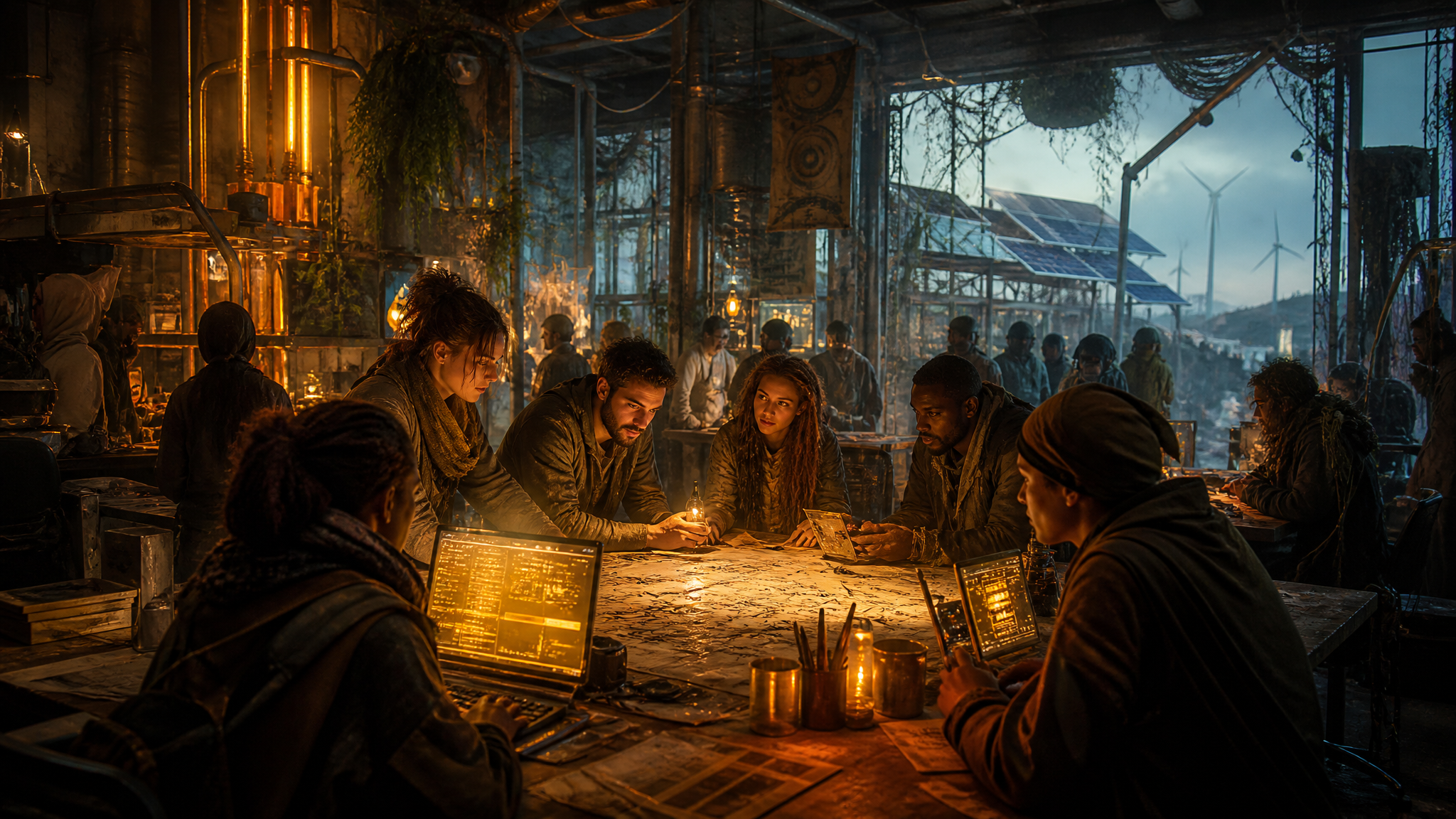
What does it mean to resist a forty-thousand-acre data center with a crowd of five hundred? On one level, the commissioners voted yes anyway, and the project moves forward to its next bureaucratic stage. But measuring resistance only by its immediate legislative outcomes misses what is actually being built in moments like these. When five hundred people show up to a county fairgrounds without the coordination of a national campaign or the resources of a well-funded environmental organization, they are constructing something durable: a network of neighbors who now know each other, a shared vocabulary for naming what is being done to them, a template for the next meeting and the one after that.
Leaderless, decentralized environmental resistance has a longer memory than any single vote. The legal challenges, the public record submissions, the local journalism, the mutual aid between affected households struggling with rising utility bills — these are the ligaments of a movement that does not require permission to persist. They are infrastructure of a different kind: slow, relational, and far harder to purchase or dismantle than a commissioner’s vote.
The Solarpunk Counter-Vision
The deepest indictment of projects like Wonder Valley is not their environmental cost alone — it is their imaginative poverty. Nine gigawatts to run data centers powered by fossil gas, in a state saturated with solar irradiance and wind potential. The same forty thousand acres could host distributed solar cooperatives generating clean power owned by the communities that use it. The same investment in infrastructure could build resilient grids that lower utility bills rather than spike them, create skilled local labor rather than import it, and leave the aquifer intact for the next generation’s ranches and gardens.
That vision is not utopian. It is available right now, with existing technology, if the political will can be wrested away from the investors long enough to act on it. The crowd at the Box Elder County fairgrounds was chanting shame at commissioners. But underneath the anger was something else: the recognition that their land, their water, and their energy should belong to them — and the stubborn refusal to pretend otherwise. That refusal is the seed of every better world that has ever been built.
The desert does not forget. And neither, it turns out, do its people.