When the Towers Fall: Building Living Mesh Networks for Autonomy
The data center boom is not progress. It is extraction dressed in the language of innovation. Across Utah, Georgia, and the American Southwest, communities are waking up to the reality that these facilities devour water, energy, and land while promising little in return. The race to build AI infrastructure before people can organize against it reveals a familiar pattern: capital moving fast, communities left to catch up. But something else is emerging in the gaps. Not just resistance, but the deliberate construction of alternatives that do not depend on the systems being imposed.
Decentralized infrastructure has always been the backbone of movements that refuse to be centralized. During uprisings and disasters, when official channels fail or are weaponized, people have turned to mesh networks, encrypted communications, and mutual aid logistics that operate outside state and corporate control. These are not temporary workarounds. They are rehearsals for the world we are building. The same principles that allow activists to coordinate under surveillance apply to powering neighborhoods, sharing resources, and maintaining memory when platforms delete histories.
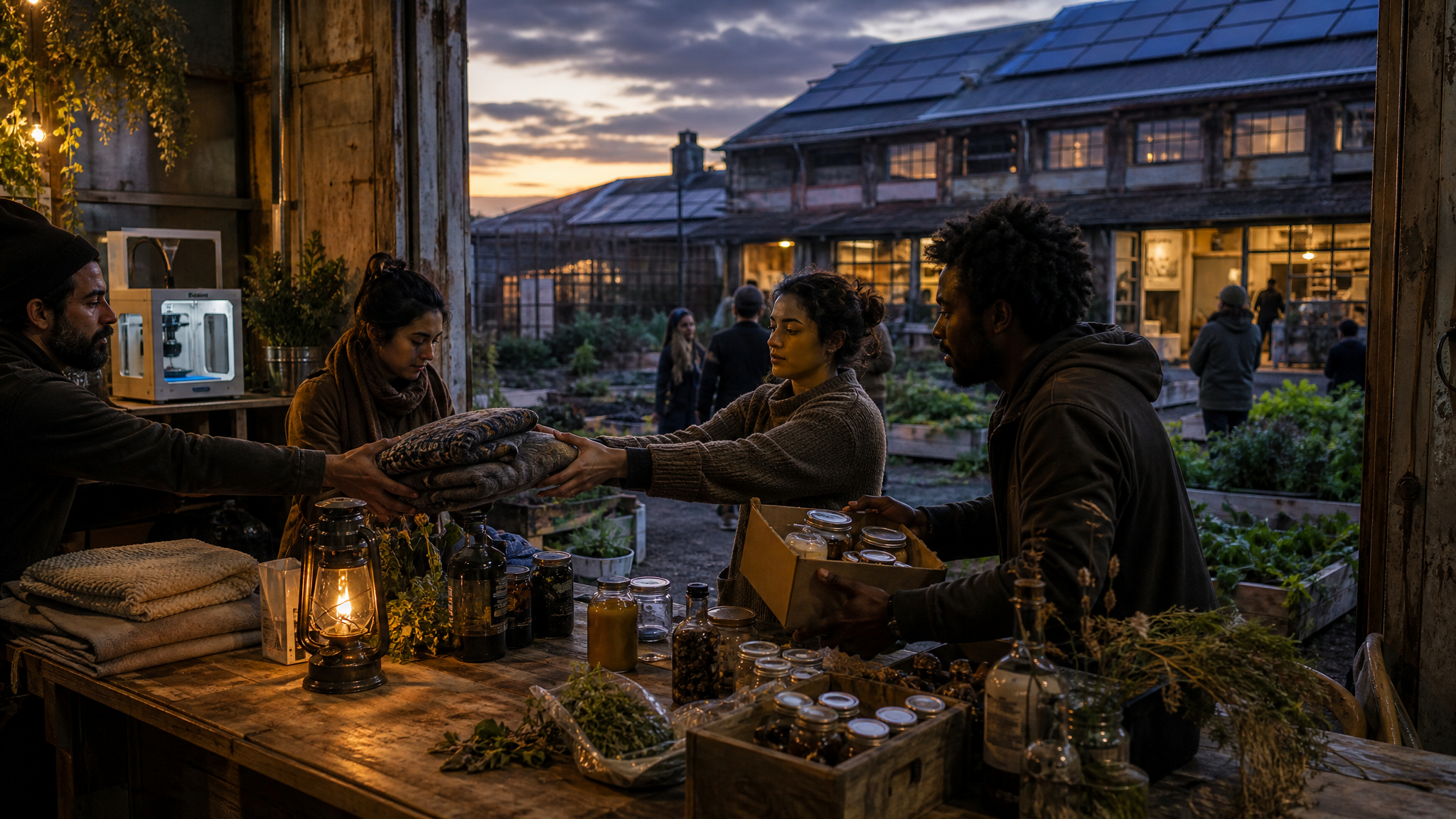
What makes this moment different is the explicit fusion of technology and territory. In places where data centers threaten aquifers and displace communities, organizers are not only protesting. They are mapping existing networks of care, skill-sharing, and resource distribution, then hardening them against disruption. Solar arrays wired into community grids. Abandoned warehouses retrofitted as fabrication spaces and server farms for local use. Knowledge passed through apprenticeships and free schools rather than platforms that can be seized or throttled. This is solarpunk meeting industrial resistance: beauty and function braided together in structures designed to outlast the empires that built the towers.
The Warehouse as Infrastructure
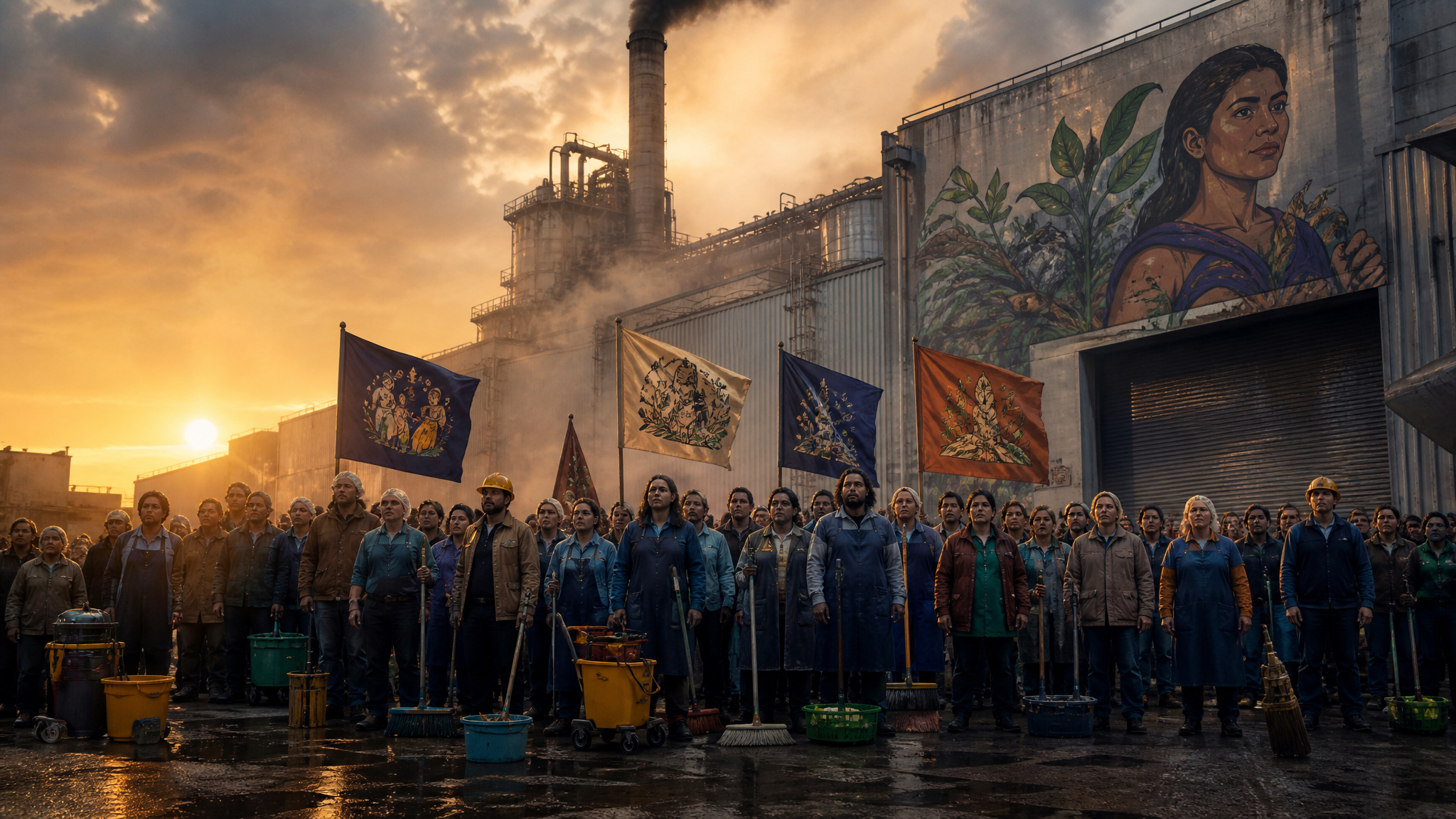
Factories and warehouses were once sites of extraction. Now some are becoming sites of reclamation. Across rust belt cities and port towns, workers and organizers are turning these cavernous spaces into hubs where fabrication, education, and mutual aid intersect. The skills that once built cars and shipped containers are being redirected toward solar retrofits, tool libraries, and mesh communication systems. The warehouse does not disappear. It is repurposed, its bones kept, its purpose inverted.
This is not nostalgia for industry. It is recognition that the infrastructure of the old world can be seized and rewired. The same loading docks that once moved goods for corporations can move supplies for neighborhood defense. The same electrical systems that powered surveillance equipment can power community servers. The transformation is not symbolic. It is practical, material, and already underway in dozens of cities where people have stopped waiting for permission to build what they need.
Mutual Aid as Protocol
Mutual aid is often described as charity or emergency response. That framing misses the point. Mutual aid is infrastructure. It is the living protocol that allows communities to survive when centralized systems collapse or turn hostile. Food distribution networks that operate without permits. Medical care provided without insurance. Information shared without platforms. These are not supplements to the state. They are alternatives that demonstrate another way of organizing life is possible.
The most durable mutual aid projects are those that treat care as a technology to be refined, not a sentiment to be expressed. They develop clear roles, redundant systems, and methods for passing knowledge across generations. They build relationships that survive repression because they are not dependent on any single leader or platform. In this sense, mutual aid is the social layer of the mesh network. The technical systems matter, but they are inert without the human connections that make them function under pressure.
Against the Data Center Logic
The push for AI data centers is not just about technology. It is about concentrating power in fewer hands while extracting resources from communities that have little say in the matter. Water tables drop. Electricity rates rise. Land is fenced and patrolled. The promise of jobs is real but narrow, while the costs are distributed across everyone who breathes the air and drinks the water. Resistance to these projects is not anti-technology. It is a demand that technology serve life rather than the other way around.
Communities fighting data centers are also building the alternatives. They are installing solar on homes and community buildings. They are creating local networks that do not route through corporate servers. They are documenting the environmental costs and sharing that information through channels that cannot be easily silenced. The fight against extraction and the construction of alternatives are not separate campaigns. They are two sides of the same refusal to be governed by systems designed to extract until nothing remains.
The Mesh That Remembers
Technology alone does not create freedom. But when it is built by and for communities that refuse to be centralized, it becomes a tool of memory and coordination that survives attempts to erase or control. The mesh networks that activists use during uprisings are the same principle that allows neighborhoods to share power during blackouts. The encrypted channels that protect organizers are the same logic that allows knowledge to persist when platforms delete accounts. The decentralized structures that make repression difficult are the same ones that make mutual aid scalable.
What we are witnessing is not the end of technology. It is the beginning of technology that belongs to people rather than platforms. The towers will continue to rise for now. But in their shadow, something else is growing. Not a single movement with a name and a leader, but a thousand small experiments in autonomy that share a common logic: build what you need, share what you have, and make it difficult for power to concentrate. The future is not waiting to be delivered. It is being wired together, one node at a time.