Shadows That Watch Back: Philly’s First Amendment Tracking and the New Architecture of Resistance
Philadelphia police recently admitted what many organizers have long suspected: they are systematically tracking “First Amendment activity” critical of artificial intelligence. What began as vague warnings about surveillance creep has crystallized into documented policy. Officers are logging protests, monitoring social media, and building dossiers on people who dare to speak against the algorithmic systems reshaping cities, workplaces, and public life. This is not an isolated scandal. It is the logical extension of a worldview that treats dissent as a data problem to be solved.
The admission arrives at a moment when AI infrastructure is expanding faster than any democratic process can contain it. Data centers are being sited in communities that never consented to them. Predictive policing tools are being trained on the very populations they claim to protect. And now, the simple act of criticizing these systems is being treated as intelligence worth collecting. The line between public safety and political control has never been thinner.
Yet the response emerging from Philadelphia’s streets and rooftops is not despair. It is something older and more durable: the refusal to be catalogued. Organizers are shifting from public-facing campaigns to encrypted mesh networks, from centralized leadership to affinity groups that dissolve and reform as needed. They are building what cannot be easily mapped. In basements and borrowed apartments, people are learning to run offline-first communication tools, to rotate SIM cards, to leave their phones at home when the stakes are highest. The surveillance apparatus is powerful, but it still depends on seeing clearly. The new resistance is learning how to disappear in plain sight.
This is not retreat. It is strategic depth. The same communities that have endured decades of stop-and-frisk, gang databases, and social media monitoring are now applying those hard-won lessons to the AI era. They understand that the fight is not only about stopping a particular data center or defunding a predictive policing contract. It is about refusing the premise that every human interaction must be rendered legible to the state and its corporate partners. When Philly cops log “First Amendment activity,” they reveal the system’s weakness: it cannot function without the cooperation of the watched.
Across the country, similar patterns are taking shape. In Los Angeles, grassroots networks are preparing for another round of ICE surges by building rapid-response infrastructures that do not rely on any single app or platform. In the Southwest, land defenders are combining traditional knowledge with encrypted radio protocols to monitor extraction projects without leaving digital trails. In the Rust Belt, warehouse workers are developing open-source tools to detect and disrupt the algorithmic speed-ups that turn human labor into data points. These efforts do not always make the news. They are not designed to. They are designed to last.
The solarpunk imagination often conjures gleaming green cities and harmonious technology. The industrial resistance tradition reminds us that power concedes nothing without a fight, and that the machines of control are built by people who can be confronted, slowed, and sometimes turned. The most interesting work today lives in the tension between those visions: using decentralized tools to carve out breathing room inside the very systems that were meant to enclose us. It is not a contradiction. It is a synthesis forged in necessity.
What Philadelphia’s admission makes clear is that the terrain has shifted. The state is no longer content to monitor crime or even protest. It is now in the business of monitoring thought about the future of governance itself. That is a confession of insecurity, not strength. Every time a department admits it is tracking dissent, it signals that the old methods of control are fraying. The question is no longer whether resistance is possible. The question is whether we will build the parallel structures fast enough to matter.
The answer will not come from any single organization or charismatic leader. It will come from the thousands of small, overlapping circles that refuse to be named, mapped, or predicted. Some will meet in person. Some will meet only in encrypted channels that rotate every few weeks. Some will never meet at all, connected only by shared protocols and a common refusal. This is the architecture of a movement that has learned the cost of being seen too clearly. It is not the end of activism. It is the beginning of something harder to extinguish.
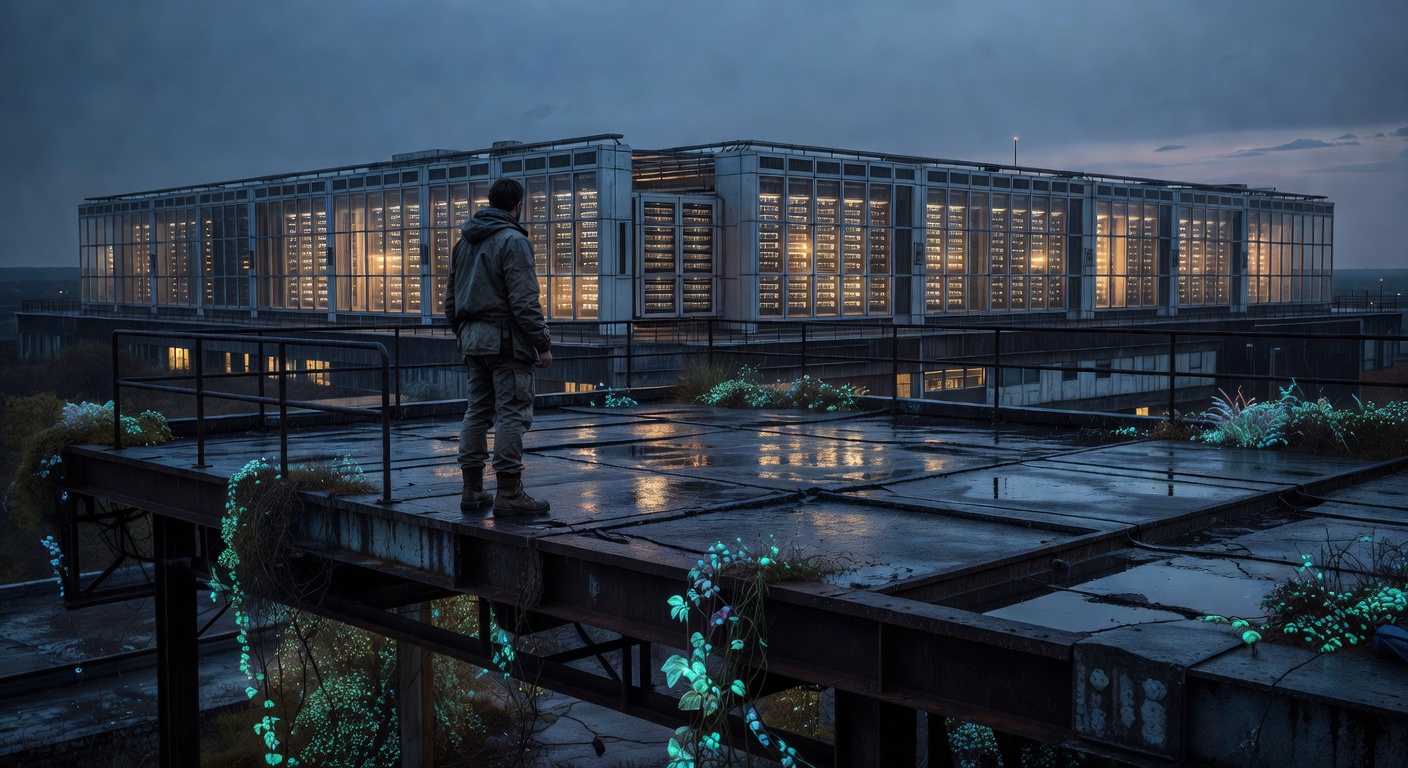
In the amber glow of a rooftop at midnight, lanterns flicker against concrete and steel. The city hums below with the low thrum of servers and sirens. Above it, people who have decided that their future will not be written by algorithms pass messages the old way and the new way at once. They are not waiting for permission. They are not waiting for the perfect app. They are building the mesh that remembers who they are, even when the towers are watching.