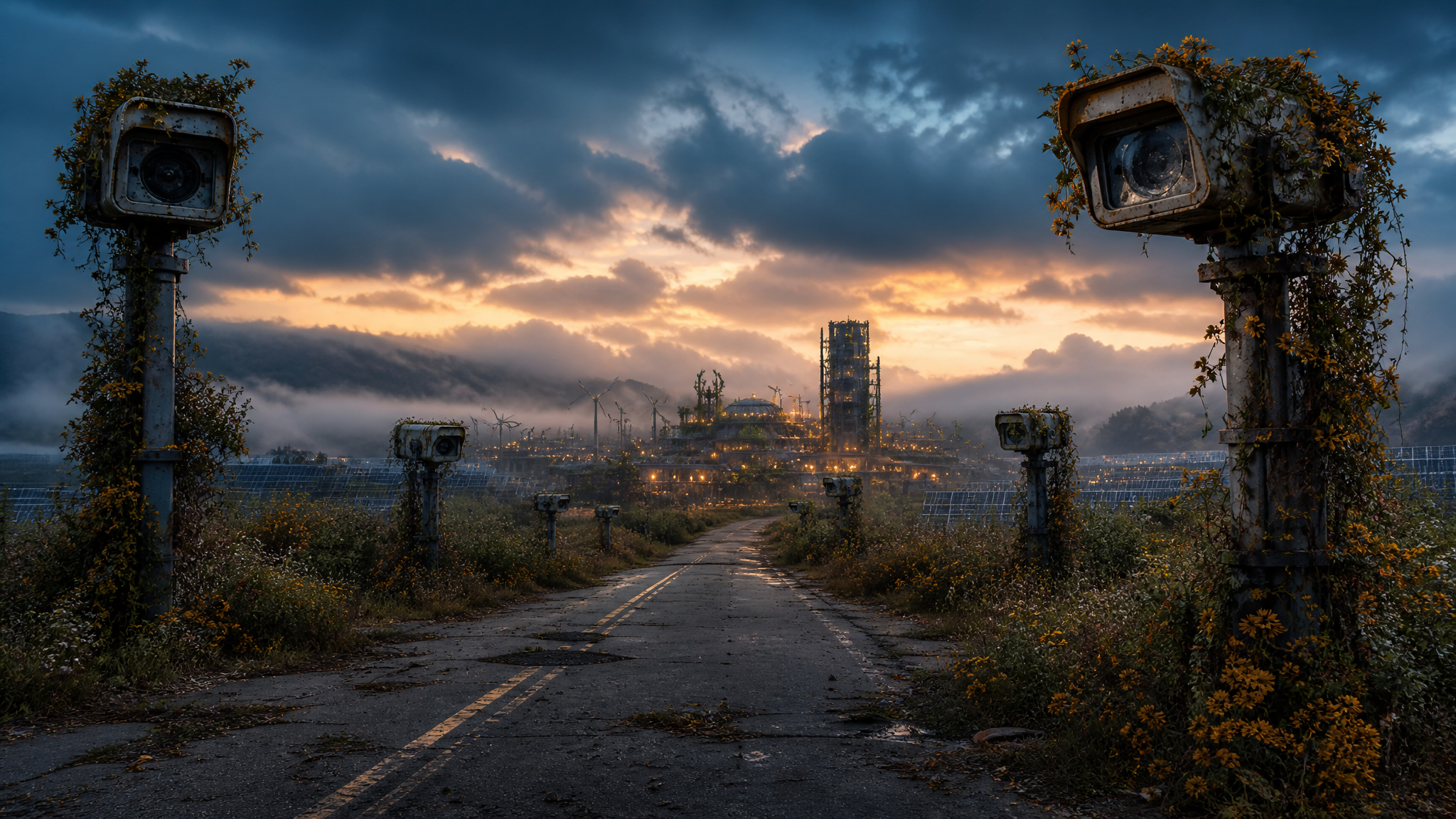
The Cameras Are Coming Down
Something shifted this week, and it’s worth pausing to feel the weight of it. In two of the most politically contested states in the country — Texas and Florida — automated license plate reader networks have been dealt a significant blow. State-level actions, each the result of sustained grassroots organizing and years of quiet, unglamorous pressure, have forced officials to step back from one of the most pervasive mass surveillance tools ever deployed on American streets. This is what winning looks like. It doesn’t always arrive with fanfare. Sometimes it arrives as a legal notice and a decommissioned camera blinking out on a rural overpass.
Automated License Plate Readers, or ALPRs, are the kind of infrastructure that slides into communities before most people realize what’s been installed. A mounted camera at an intersection, a box on a telephone pole, a reader bolted to the back of a patrol car — each one silently cataloguing the movement of every vehicle that passes. No warrant. No probable cause. No notification. Just data, accumulated and stored, available to any agency with a subscription and enough curiosity. The Electronic Frontier Foundation has documented this apparatus exhaustively: a culture of unrestricted access in which officers treat a mass surveillance network like a personal search engine, tracking the movements of everyday people with no guardrails and deficient audit processes.
The backlash that finally moved the needle wasn’t a single dramatic moment. It was the accumulation of community meetings, local resolutions, watchdog reports, and stubborn organizing in city after city — often in places that share almost nothing politically except a bone-deep distrust of being watched without consent. That cross-ideological coalition is itself a kind of infrastructure. It’s the architecture of resistance built without a central command, without a national organization funding it, without a celebrity figurehead. It was built the way all durable things are built: by people who showed up, kept records, and refused to let the issue die.
Surveillance as a Privatized Industry
What makes this moment more urgent — and the Texas and Florida victories more significant — is the larger landscape they exist within. As investigative journalists at The Intercept and 404 Media have been reporting, the American surveillance apparatus has undergone a profound and largely invisible transformation. The capabilities that once required the resources of the NSA or the CIA can now be purchased as a service from a contractor in Virginia. Private companies like Flock Safety, Palantir, and dozens of smaller firms without household names have become the infrastructure of state surveillance, operating in a legal grey zone that sidesteps the warrant requirements that would apply if government agencies did the same work directly.
“Anything that can be surveilled is being surveilled,” 404 Media’s Jason Koebler observed recently, “and a lot of this is happening from companies that very few people have heard of.” The privatization of surveillance isn’t just a technical shift — it’s a structural one. When a police department buys location data from a broker rather than subpoenaing it from a phone company, it bypasses constitutional protections that took decades to establish. When an AI system synthesizes behavioral data and financial activity to predict who might resist a government action, the targets of that system have no notice, no recourse, and often no knowledge that they were ever flagged.
This is the world the cameras serve. Their removal from roads in Texas and Florida is not just a policy win — it’s a small act of structural reclamation. Every camera that comes down is a data point removed from a system designed to make resistance more legible to power.
Building the Anti-Surveillance Coalition
What gives this moment genuine strategic weight is the observation that opposition to ALPR networks is, in Sam Biddle’s words, “completely apolitical.” From the libertarian right to the abolitionist left, from rural gun owners worried about federal overreach to urban organizers who have watched their communities over-policed for generations — the coalition against mass surveillance is wider than any single political tribe. That breadth is not a weakness. It’s the most durable kind of political force there is.
Building that coalition requires something that doesn’t come naturally to movements trained to stay in their lanes: the willingness to make common cause with people who disagree about almost everything else. It requires treating privacy as a universal value rather than a partisan one. It requires showing up to zoning boards and county commission meetings and state legislative sessions and making the argument not in the language of any particular ideology but in the language of freedom from being watched — a language that crosses almost every political border.
The cameras in Texas and Florida are coming down because people did exactly that. They learned the system, named the harms, built unexpected alliances, and applied pressure until something moved. In a moment when the surveillance industry is scaling faster than the law can track it, these victories matter not just for what they remove but for what they prove: that organized communities can still dismantle the watchtowers. That the architecture of control is not inevitable. That even in the most privatized, distributed, algorithmically-managed surveillance apparatus the world has ever seen, the people who live inside it retain the power to say no — and sometimes, when they say it loudly enough and together enough, the cameras come down.
That is not a small thing. That is the whole thing.