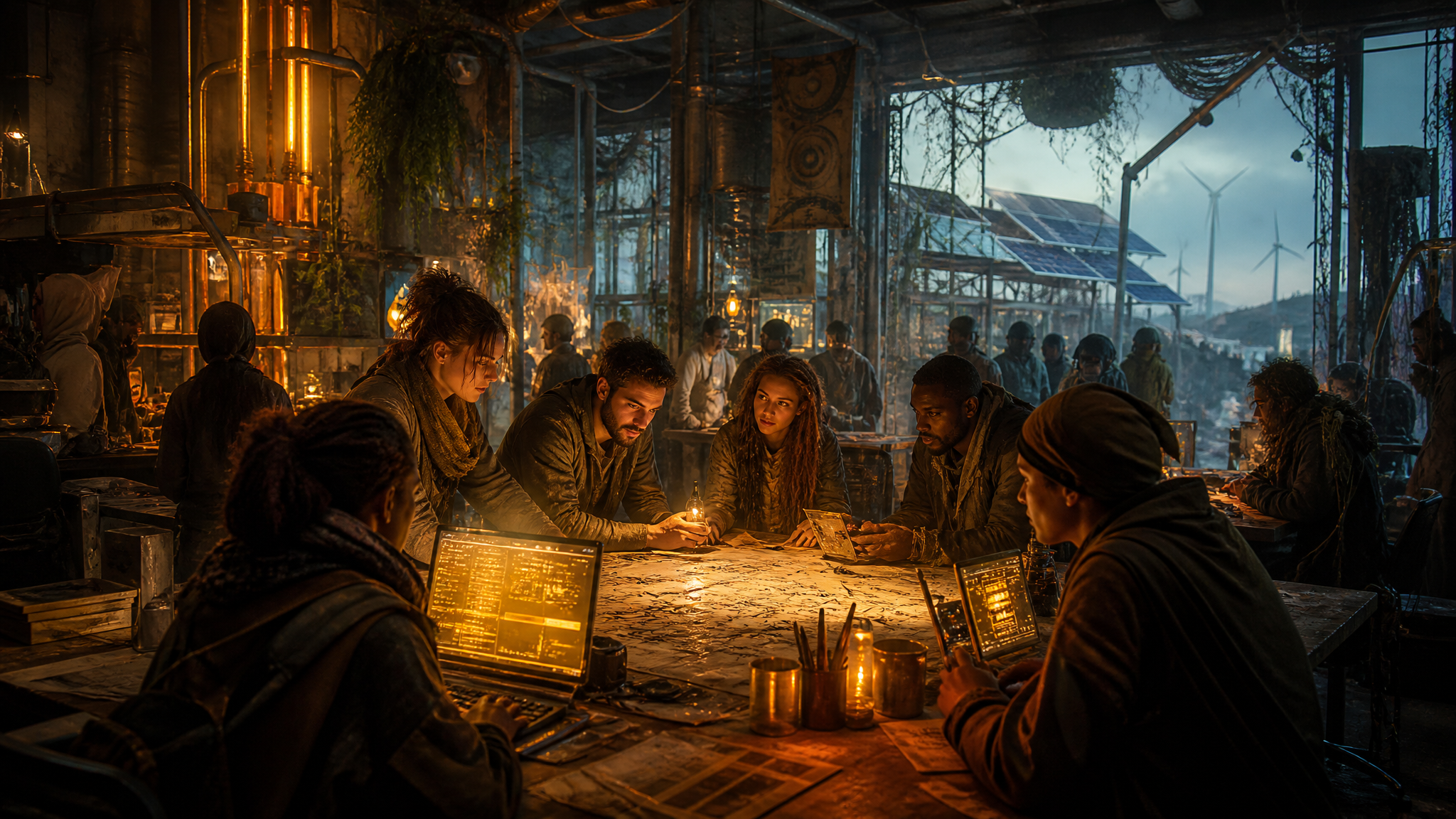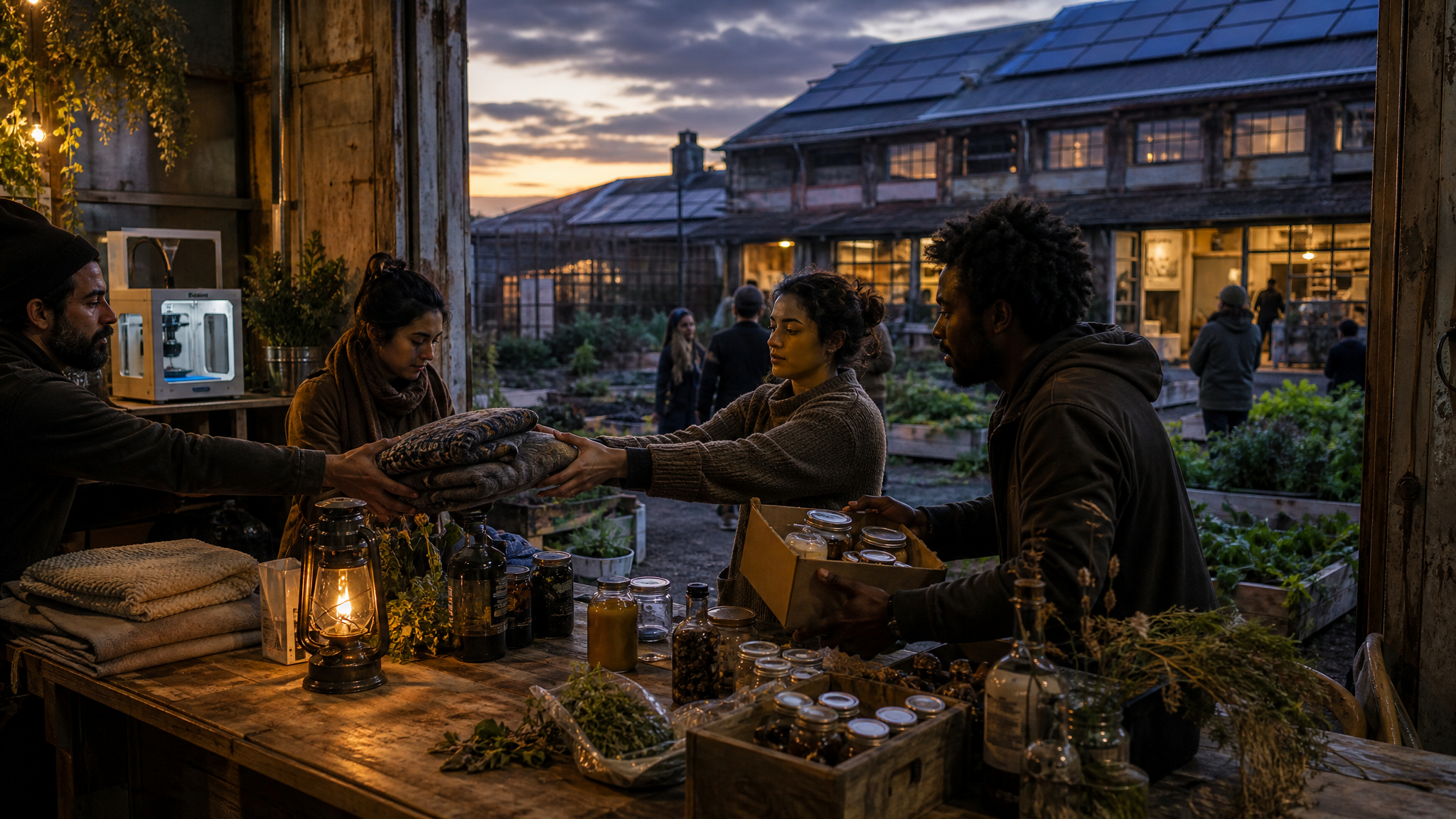
In warehouses that smell of solder and basil, in church basements and reclaimed storefronts, in Signal threads and hand-painted murals on the sides of shuttered factories — a new infrastructure of care is being assembled. Not by governments. Not by tech billionaires. By ordinary people who have decided, quietly and without fanfare, that they will not wait for permission to take care of each other.
This is the story of mutual aid in 2026: not a trend, not a hashtag, but a living, breathing framework for survival and resistance that is proving more durable than anyone in power expected it to be.
The Scaffolding That Holds When Everything Else Falls
When federal immigration enforcement surged into Minneapolis earlier this year, it did not find an unprepared city. What ICE encountered was a community with years of deep relational infrastructure already in place — built from the grief and solidarity that followed George Floyd’s murder, strengthened through mutual aid networks that had been feeding, sheltering, and connecting neighbors since the pandemic. Volunteers met released detainees outside the Whipple Federal Building in subzero temperatures, warm cars waiting, coats and food ready. Grocery deliveries reached families too frightened to leave their homes. Children were escorted safely to school by neighbors who barely knew their names but understood what was at stake.
Federal agents knew how to crack down on a small, violent uprising. They had no playbook for ten thousand neighbors showing up quietly and nonviolently, simply insisting on caring for each other. That is the power that mutual aid builds: not the spectacular power of a battle won, but the deep, stubborn power of a community that knows it will outlast the machinery trying to crush it.
Open Source, Open Hands: Manufacturing Solidarity Across Distance
In Tucson, Arizona, a small non-hierarchical collective called the Distributed Medical Device Manufacturing (DMDM) network spent April working through the nights in what can only be called a 21st-century barn raising. Using an open-source tourniquet design first published to GitHub by a medical solidarity organization called Glia — originally created in response to the illegal blockade of Gaza — DMDM volunteers 3D-printed 250 tourniquets and shipped them to Lebanon, where Israeli strikes had wounded thousands and emptied hospital supply rooms in under ten minutes.
This is what decentralized manufacturing looks like when it is wielded not for profit but for life. The design is free, the code is public, the machines are accessible to anyone with the will to learn them. In this moment of cascading crisis — war, drought, tariff-driven food insecurity, fertilizer shortages closing in on global supply chains — grassroots networks are quietly building the material infrastructure of a different world. Not waiting for the supply chain to recover. Building a new one, from below.
Beyond the State, Into the Territory
In Puerto Rico, mutual aid centers that occupied abandoned buildings in the aftermath of Hurricane Maria are still there, four years later. Not just surviving — flourishing. They have grown into nodes of cooperative economic infrastructure, centers of Indigenous self-governance, laboratories for thinking about how communities care for each other at a territorial level rather than just distributing charity from above. Organizers with Mutual Aid Disaster Relief, who interviewed more than sixty community projects for their new docuseries The Elements of Mutual Aid, describe what they saw in Puerto Rico as something rare and crucial: the translation of crisis-born solidarity into durable, self-governed territory.
The difference, they argue, is that these centers did not just hand things out. They built relationships of accountability, shared political commitments, and a sense of place. They moved horizontally rather than vertically. They created structures from below and to the left, as the Zapatistas phrase it — not replicating the state’s logic of control, but replacing it with the older, deeper logic of mutual obligation.
Resilience Is Not a Solo Sport
There is a dominant story in our culture about what survival looks like: individual wealth, private stockpiles, personal preparedness kits. It is a story that conveniently requires very little of us in relation to each other, and a great deal of us in relation to markets. But the historical record tells a different story entirely. Before the Civil War, free Black communities built mutual aid societies that pooled resources for burial costs, funded schools and churches, and organized for abolition. Indigenous peoples across the Pacific Northwest deepened community bonds through potlatches — ceremonies built around the radical act of giving rather than accumulating. European settlers raised barns together, harvested collectively, and understood that no family survived a hard winter alone.
These are not romantic footnotes. They are working models, tested over centuries, that have been deliberately dismantled by systems that benefit from isolation and dependence. The resurgence of mutual aid is not nostalgia. It is a rational, hard-won recognition that the most reliable infrastructure of resistance has always been the web of relationships between people who have chosen to be accountable to each other.
The Architecture of What Comes Next
What authoritarians fear most — what every authoritarian has always feared most — is not the bomb or the barricade, but the neighbor who shows up. The collective that occupies the abandoned building and turns it into a seed library, a medical supply depot, a place where children can safely wait for school. The 3D printer in someone’s garage running open-source code to manufacture a tourniquet that ends up saving a life in Beirut. The Signal thread where a dozen people coordinate grocery deliveries for families who cannot go outside.
This is the architecture of a world that is already being built in the margins of the collapsing one. It does not look like revolution from a distance. Up close, it looks like neighbors, choosing each other, day after day, with the radical patience of people who understand that what they are building will outlast anything trying to stop them.
The scaffolding is being raised. You already know where to find it.